


Prehistoric humans may well have sung in harmony, though we can never know just how sophisticated their music was. What we do know is that by the 15th century in Europe, four-part vocal music had become the norm, in both sacred and secular contexts. And to the extent that instrumental music tends to grow from phenomena already happening in vocal music, it comes as no surprise that instrumental quartets took on life.
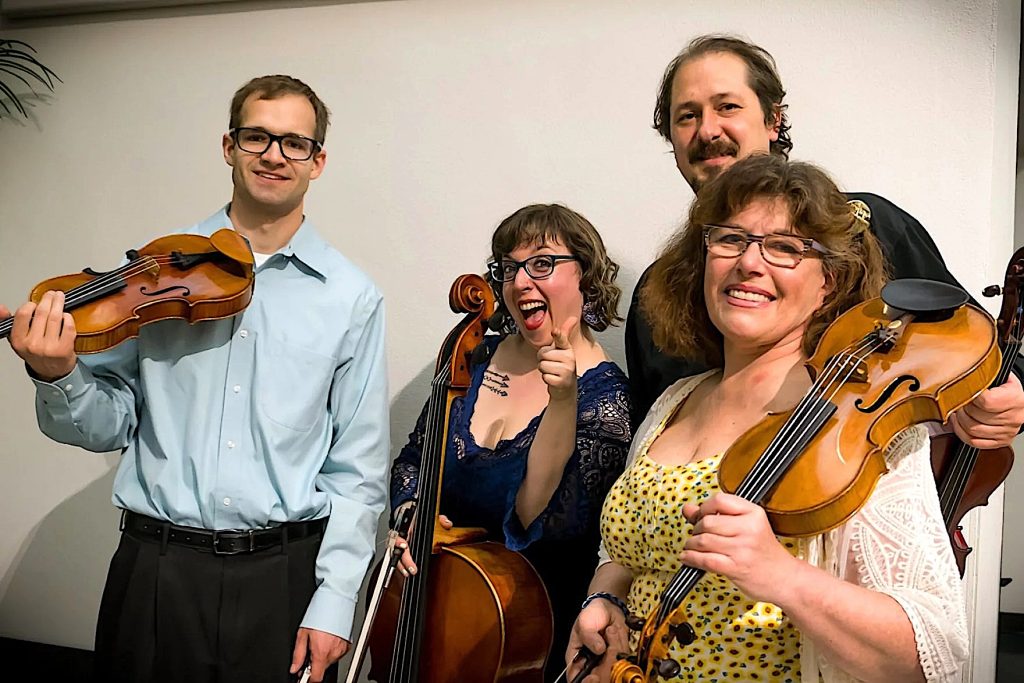
By the 18th century, a group of friends or family could play nearly any music of the period with just two violins, viola, and cello: the equivalent of a soprano-alto-tenor-bass choir. Music publishers picked up on this Hausmusik phenomenon, with arrangements of everything from symphonies to operas.
Beginning in the 1760s, Joseph Haydn wrote a series of 68 string quartets that were so brilliant that they singlehandedly established this as a new genre. These were, by their nature, “conversational” in spirit, as reflected in a comment the poet Goethe made in 1829: “When I listen to a string quartet, I feel as if I were eavesdropping on four intelligent people conversing amongst themselves. … And one believes one might learn something from their discourse.” Already by the early 19th century Beethoven was writing quartets that were so complex they required a group of professional musicians devoted almost solely to quartet playing—a phenomenon that has continued to the present day.
The early moderns continued to venerate the genre: Stravinsky likened it to “a miniature orchestra until itself.” Bartók called it “the perfect medium for exploring complex musical ideas and intimate emotions.” The genre is still favored by composers, and its repertoire is vast. “The quartet gives you a range of sound that is almost symphonic,” said Alla Aranovskaya, founding member of the St. Petersburg String Quartet that began in Russia and is now based in Kansas City. “It’s like a four-part symphony, with all the timbres, all of the variety of sounds.”
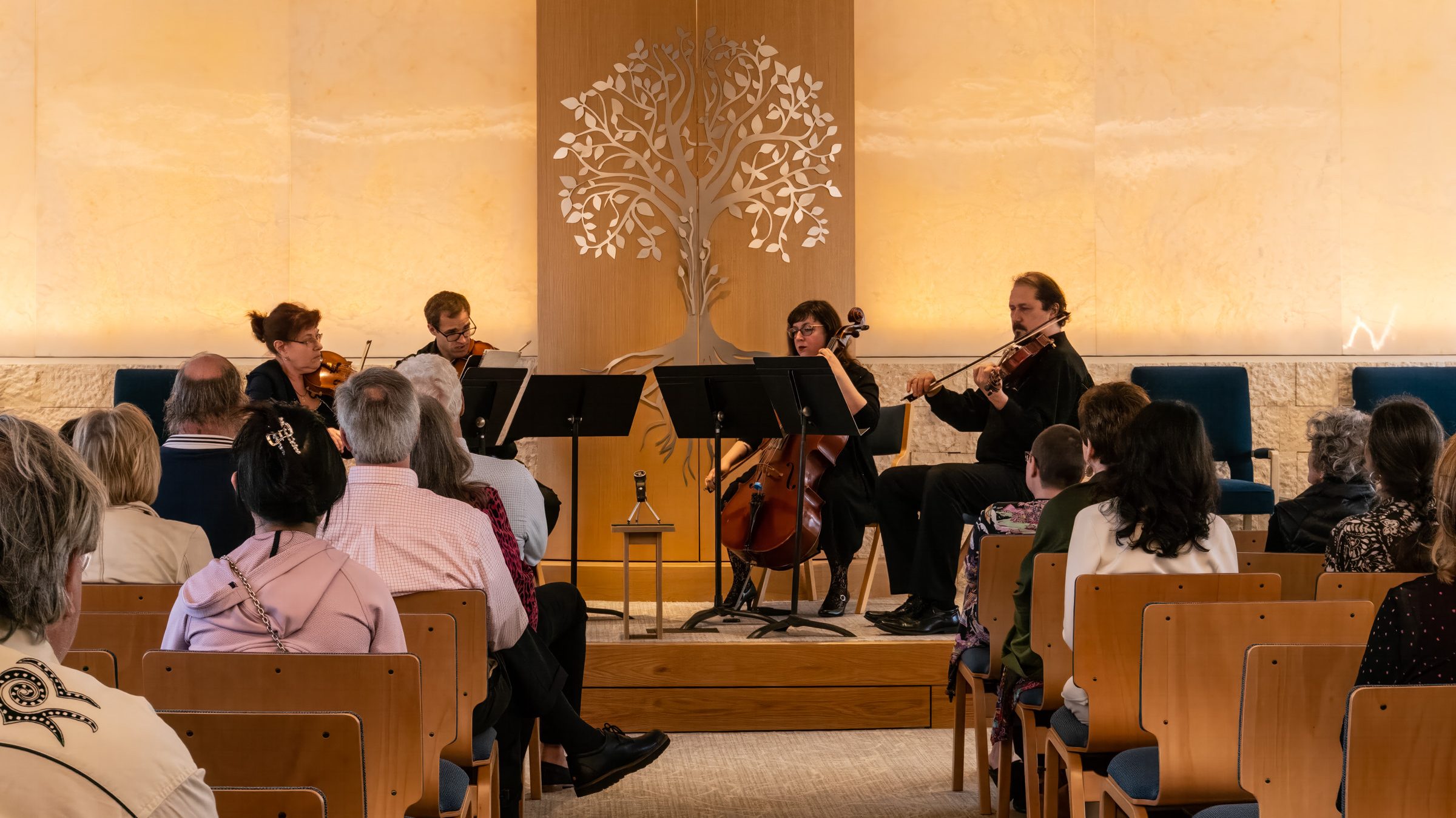
Just as there are historical forces behind the quartet’s predominance in the repertoire, there are also clear reasons why quartets have remained audience favorites. “The string quartet grew naturally out of basic tonal theory,” said Ned Kellenberger, who joined the St. Petersburg group as second violinist in 2021. “With four players you still have very distinctive voices and roles. All four of you are soloists, and you each have a personality. … From an audience perspective, it’s fun to follow each individual player. But it’s also a very cohesive whole.”
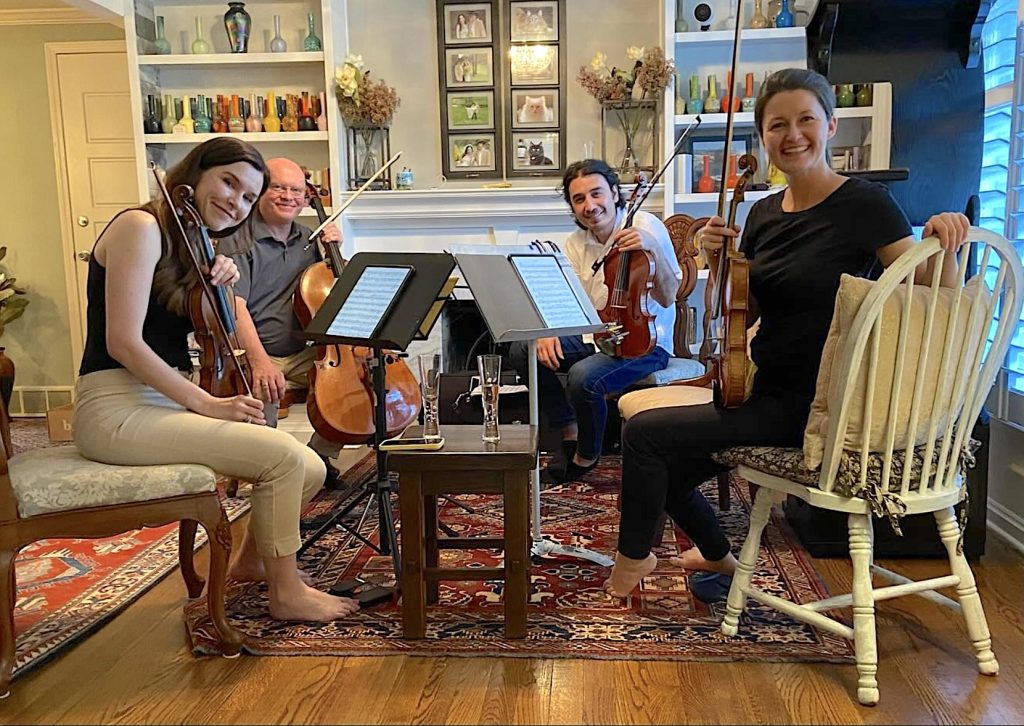
Kansas City has been unusually rich in string quartets during the past quarter century—with groups such as Opus 76, the Brookside Quartet, the Miami Quartet (two of whose members are UMKC Conservatory faculty), and less formal ensembles such as the Fountain City Quartet. Members of the NAVO ensemble have formed a group they call the Frontier String Quartet. Many local after-school music programs place special emphasis on training string students in quartet playing.
The most storied local professional group is the St. Petersburg Quartet, which celebrated its 40th anniversary season last year and continues to be regarded as one of the nation’s significant quartets—especially for the music of Tchaikovsky, Borodin, Prokofiev, Arensky, and Shostakovich. It was founded at the conservatory at St. Petersburg, where its initial members studied in the “Russian school” of string playing under such legends as Vladimir Ovcharek, first violinist of the Taneyev Quartet.
Originally called the Leningrad String Quartet, its founding members included violinist Alla Aranovskaya and cellist Leonid Shukaev. It was somewhat unique in that it featured initially two women and two men—with a woman, Alla, in charge. “Our teacher told us: Forget about democracy in a quartet,” she said. “You can discuss things, but in the end the decision has to come down to one person.”
The group distinguished itself early on with a series of international prizes, including the Silver Medal and Special Prize at the Tokyo International Chamber Music Competition and first prizes at the Vittorio Gui Competition in Florence and the International Competition for Chamber Ensembles in Melbourne. When the city of Leningrad reembraced the name St. Petersburg in 1991, the quartet followed suit.
During the group’s first two decades it toured and recorded extensively and collaborated with major artists. From 1999 to 2004 the group recorded Dmitri Shostakovich’s 15 quartets for Hyperion, in addition to quartets of Prokofiev, Glazunov, and Prokofiev for the Delos and Dorian labels. Their disc of Shostakovich’s Quartets 3, 5 and 7 on Sony was nominated for a Grammy Award in 1996.
It was during a residency at Oberlin Conservatory of Music (1998 to 2003) that the quartet decided to stay in the United States, subsequently taking up a similar residency at Wichita State University. In 2009 they launched the St. Petersburg International Music Academy (now called the Leopold Auer Music Festival), a summer intensive for students.
In 2010 the original cellist, Leonid Shukaev, joined the WSU faculty and subsequently became principal cellist for the Wichita Symphony. In 2017, violist Boris Vayner—a member since 2005—took a position at The University of Kansas, and the quartet withdrew into a sort of hiatus.
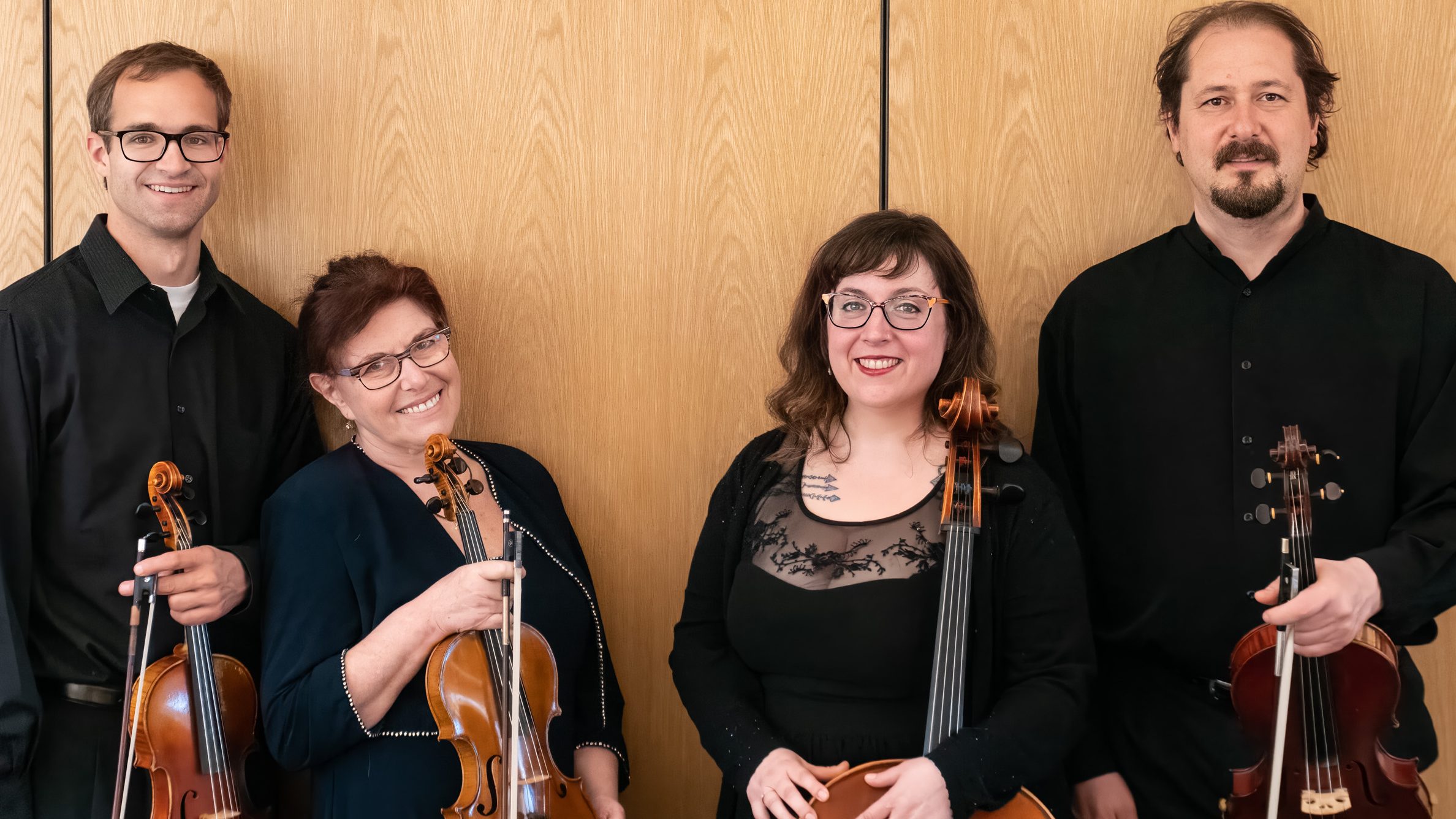
As the last remaining original member, Alla found that life was not complete without the quartet that had been a part of her life for so long. “It was a big empty space when we stopped playing together,” she said. But finding replacement players for a group that had consistently functioned at such a high level was a challenge. When Boris and Alla, now husband and wife, decided to resuscitate the group in 2022, they were fortunate to find new players—Ned and Sascha Groschang—who quickly aligned with the group’s aesthetic. “It is always difficult to find someone with the same serious work ethic,” Alla said. “It’s like losing a limb … it takes a couple of years to get back to normal.”
Alla’s goal has always been to “preserve the legacy of the St. Peterburg Quartet,” she said. Not just the distinctive sound but also “the idea of conversation, of four people making music live—with a sound that everybody will recognize, and with feelings that everybody can feel.” Alla has brought much of the Russian tradition to the quartet’s aesthetic, including a focus on the “singing” melodic line that has long been part of that ethos. “Part of the reason it’s so rewarding to play with this group is that we’re focused on the vocal aspect of music,” Ned said. “The goal is to make a melody sound like it is being sung.”
A string quartet is like a family, with some of the potential for dysfunction that can imply. “We see each other once a week,” Boris said with a laugh, “and we’re still happy to come together.” At its best, chamber music has friendship at its very heart. “I love playing all different styles of music, and fortunately I’ve found a lot of people that I like to play with in those groups,” said Sascha, who is a member of several area chamber groups. “But it is rare in classical music to find a group of people that all get along and that all appreciate each other as people and as musicians.”
Over the years, the members have developed a sort of shorthand that allows them to prepare efficiently. In rehearsals, Boris said, “we try to play as we are going to perform. It can’t just be 50 percent now and 100 percent when we go on the stage. If it’s not in the rehearsal then it will never happen in the concert: Every detail, every musical idea, every phrase has to find life in rehearsal.”
Since 2022, the group has played in Ecuador, Peru, Israel, Estonia, Germany, France, Kazakhstan, and throughout the United States. This year they make their South African debut. For Sascha, coming into this group as a newcomer was an exhilarating experience. “Whoever has the melody is the most important person at that moment,” she said of the environment. “And if you don’t have the melody, you need to support the person who does. That’s true in life, too: There are times when you need to shine and times when you need to support. That’s a really big component of our group dynamic.”
—By Paul Horsley
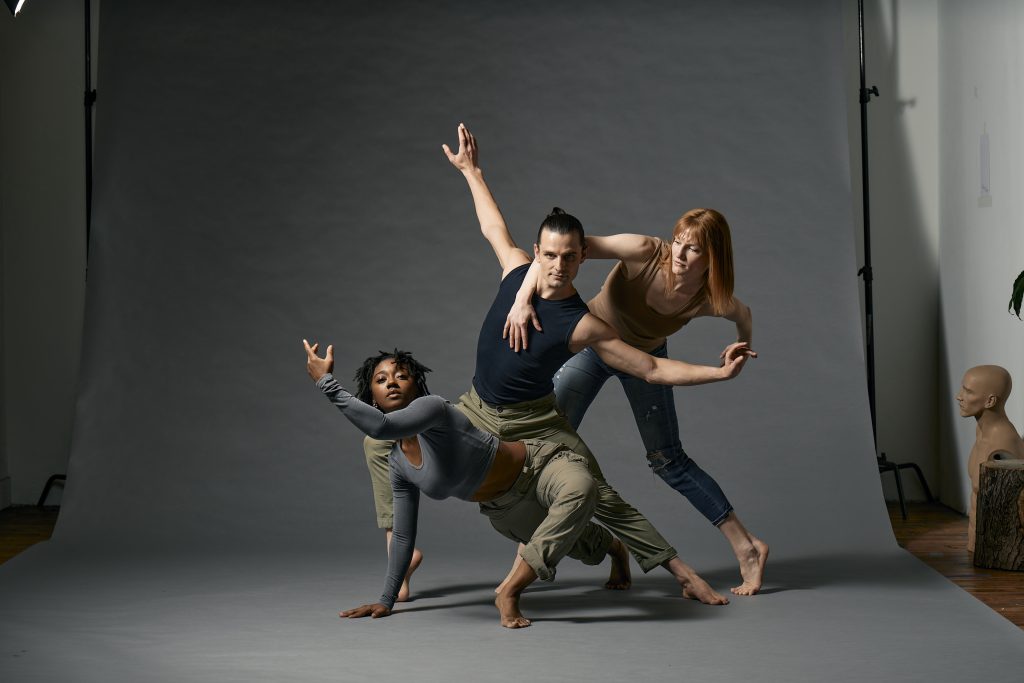
On March 10th at Swarthout Recital Hall in Lawrence, the Quartet performs concerto movements by Mozart, Beethoven, Schumann, Brahms, and Turina, in a free concert featuring students of Priscila Navarro’s University of Kansas piano studio. The Quartet will also perform with Owen/Cox Dance Group this March 27th through the 29th at H&R Block City Stage-Union Station, and in May they present a program of Shostakovich and Brahms. Contact: stpetersburgquartet.com or owencoxdance.org. To reach Paul Horsley, performing arts editor, send an email to paul@kcindependent.com or find him on Facebook or X/Instagram (@phorsleycritic).
