


If you thought ballet has a long history, wait until you look into the Indian classical style known as bharatanatyam (or bharatnatyam). European classical dance took shape just three centuries ago, while bharatanatyam traces its roots back more than 2,000 years. Widely regarded as the oldest dance form still being performed today, this style from southern India is fantastically complex and difficult to master, with intricate and often quite athletic steps; carefully codified poses and positions (adavus); and a complicated set of finger-and-hand gestures or mudras—32 single-handed and 23 two-handed—each representing a god, a place, a creature, a heavenly body, a natural phenomenon, or an emotional state.
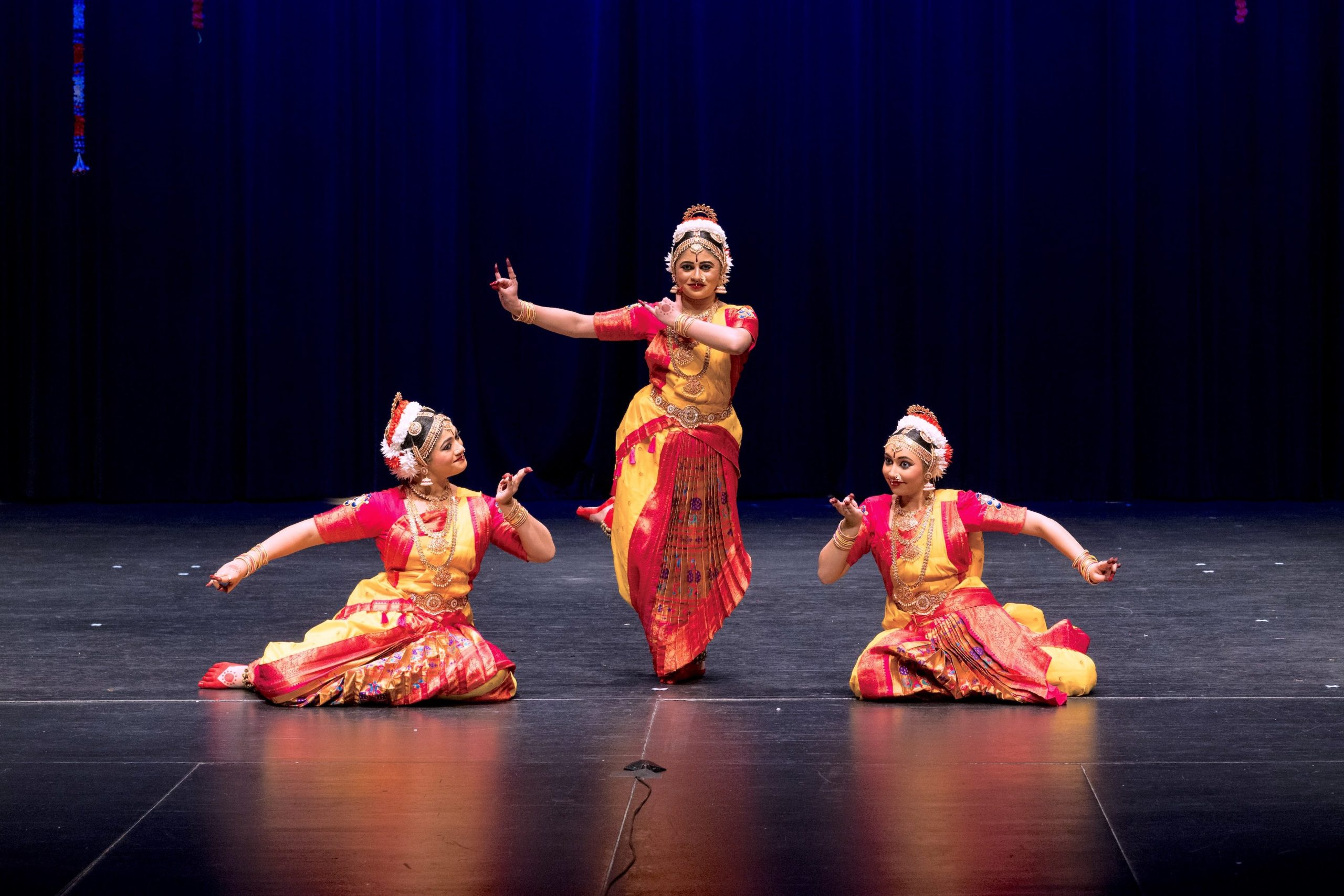
Children, mostly girls, begin learning bharatanatyam at age four or five and generally study for a decade or more before they are ready to present their arangetram: a sort of graduation recital in which the dancer is called upon to show the full range of her technique, grace, and skill: usually accompanied by live musicians in front of a live audience.
And with the local Indian-American population on the rise, interest in classical Indian dance is also increasing. (Last year, the Kansas City Convention and Visitors Bureau gauged the Indian-American population at 4,000 families, with other estimates running as much as twice that high.)
Despite the intricacy of bharatanatyam, at its core is the expression of human affect, toward telling relatable stories from Hindu mythology or tales of the everyday lives of gods and goddesses such as Shiva and Krishna. Bharatanatyam recognizes nine navarasas or fundamental emotional states: love, joy, compassion, anger, heroism, fear, disgust, amazement, and tranquility—the building blocks, after all, of most expressive art.
The good news is that you don’t have to travel to India to study this dance: There are schools all over the world, including several in Kansas City, that teach the art form. One is the Nrityam School of Dance, directed by Guru Ketaki Ghanekar, who together with her husband, Ajay, recently welcomed me into the company’s spacious studio in Overland Park to chat about Indian dance and to observe a class of young women rehearse.
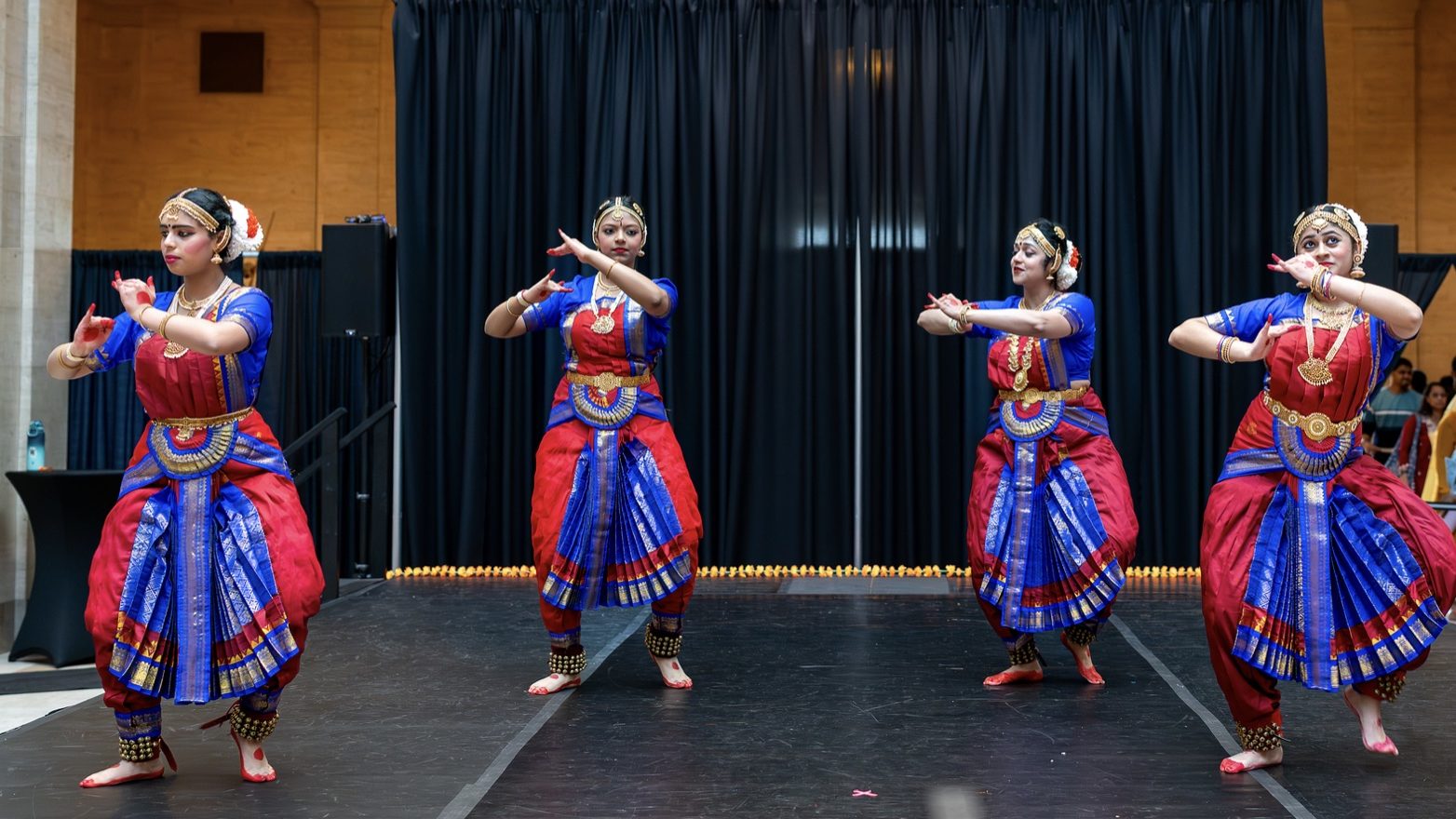
“It takes many years of learning,” said Ketaki, a native of Mumbai who founded the dance school in 2012. “It’s not something you can just study briefly: It’s practice and it’s commitment.” As the most popular of the classical or traditional dance forms of India, bharatanatyam is valued by Indians living abroad as a means of maintaining connections to their cultural roots. As many as 20 percent of Indian girls in the United States study classical dance of some kind.
“Even in India the percentage is not that high, because there the culture is all around you,” said Ajay Ghanekar, who in addition to championing his wife’s career is co-founder and managing partner at Ubiquity, a management firm focused on digital infrastructure. “When you relocate outside of India, you feel an obligation to preserve and pass on the culture, otherwise your kids have no connection to it. And teaching dance is much easier than giving them lectures about their culture.”
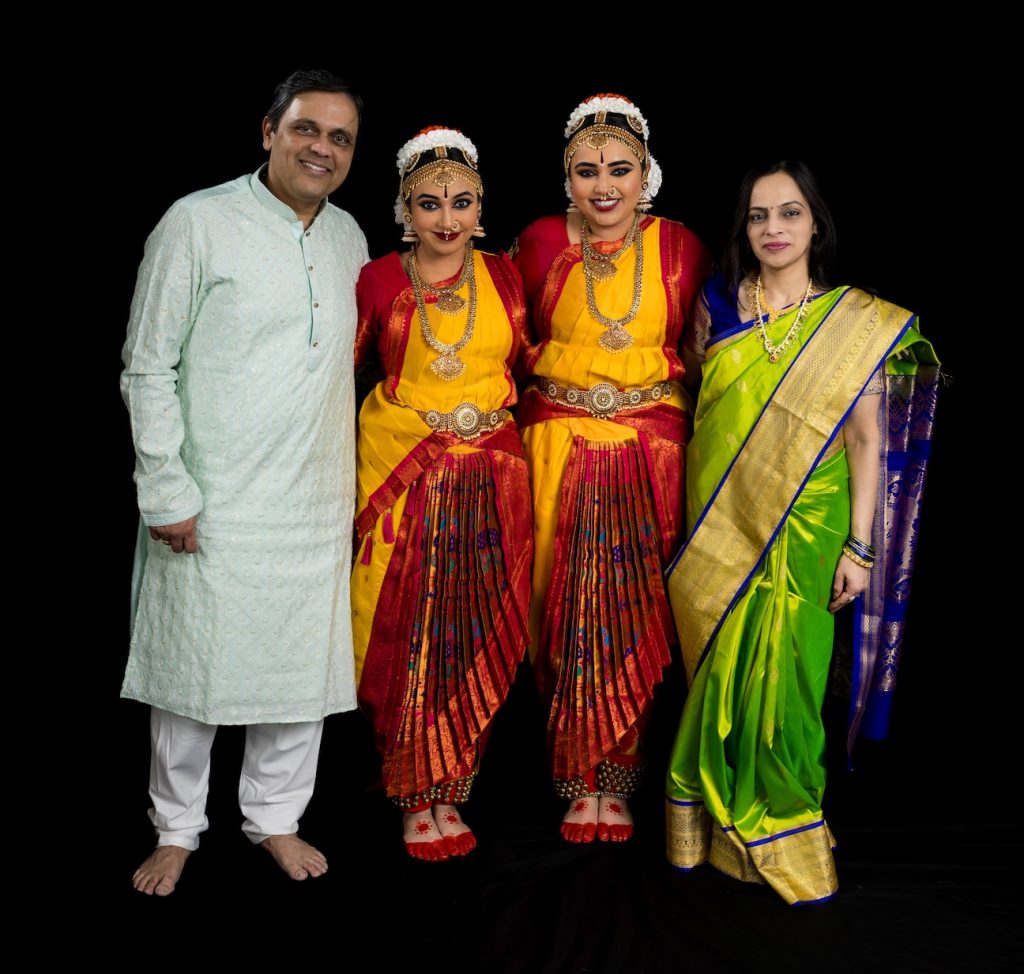
The Ghanekars’ two daughters, Aahna and Sanika, have both studied Bharatanatyam since age four: Sanika has completed her arangetram and Aahna expects to do so soon. Encouraged by her parents, Ketaki studied dance in Mumbai with the great Guru Vidya Subramaniam (Patel), earning a master’s degree in Indian Classical Dance at the Arts Society of Mumbai and bachelor’s and master’s degrees in commerce from the University of Mumbai.
Ajay, also a Mumbai native, is an engineer whose career in telecommunications has also taken him and the family to San Diego, Denver, Detroit, and Houston. They immediately felt comfortable in Kansas City, where Ketaki formed the school in which she could pass on her knowledge of the Kalakshetra style of Bharatanatyam. “Even in the Indian community here, we felt a Midwestern friendliness” Ajay said.
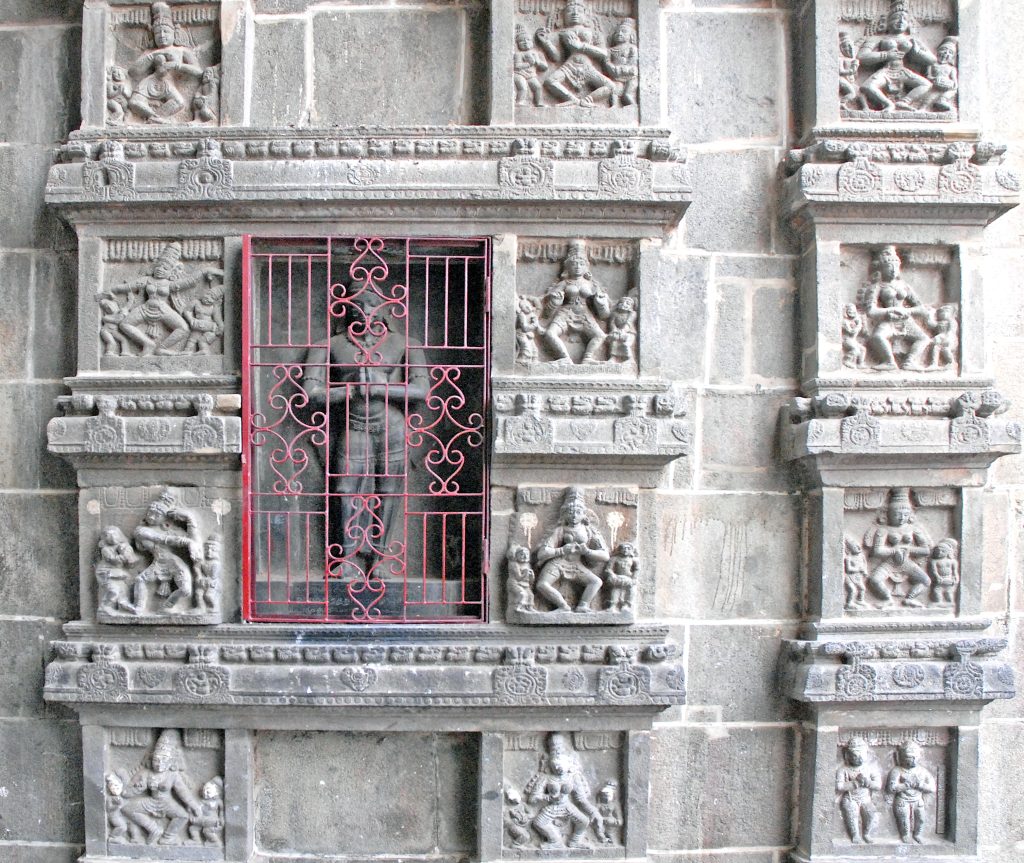
The word bharatanatyam is an amalgam of bhava (emotion), raga (melody), tala (rhythm) and natyam (dance). The word replaced an older term, sadir, which was in earlier times performed exclusively in temples by women (devadasi) in service of a deity. While fragments of “oral tradition” remain, clues to the dance are found in early epics such as the Natya Shastra and in the vivid dance poses (karanas) such as those carved into the ancient temples of Brihadeeswara and Chidambaram in Tamil Nadu.
Medieval kings of India valued classical dance as sacred ritual, until colonial rulers misconstrued it as immoral and banned it in 1910. It was revived in the 1930s, chiefly by E. Krishna Iyer and dancer-choreographer Rukmini Devi Arundale, both of whom are revered today as saviors of bharatanatyam. Rukmini founded the Kalakshetra Foundation toward rebuilding dance’s respectability.
Bharatanatyam is one of eight principal Indian classical styles, each associated with a region. In Kansas City, in addition to bharatanatyam, one can find instruction in kathak and kuchipudi, at least. At the Nelson-Atkins Museum of Art’s recent Passport to India, an annual showcase for dance, music, and visual art, one could watch several of these forms, including folk and Bollywood-style dances. (The latter is a mixture of folk dance with a wide array of classical and popular styles. “Bollywood dance is a fusion,” Ajay said. “It combines various dance forms from traditional Indian classical and folk dances with western styles like hip-hop, jazz and salsa.”)
Bharatanatyam remains central to India’s classical culture, and the skills that it engenders build confidence, control, and clarity of purpose. “Students start to feel more confident as they learn more,” Ketaki said, adding that the goals are not just dance-related. Bharatanatyam teaches students “to be respectful, grateful, graceful, confident, and many things more,” she wrote at nrityanatyam.com. “It teaches you to appreciate things you have in life … and introduces many skills necessary to become an accomplished and astute learner for years to come.”
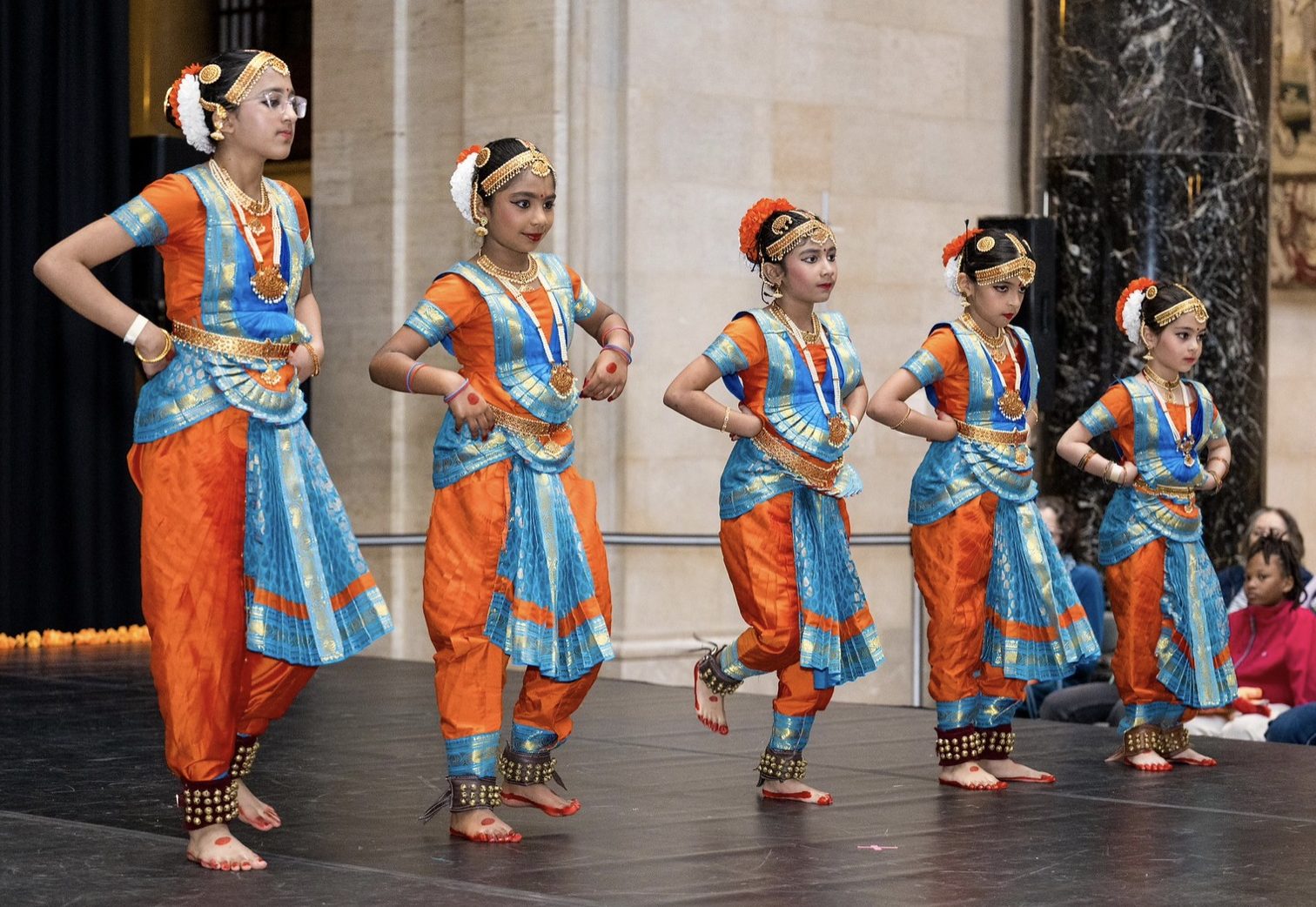
The word “classical” can mean many things in different contexts, but “in Indian dance ‘classical’ is something that takes years of training to learn,” Ajay said, as opposed to folk dance, which is simpler.
At the Nrityam studios in Overland Park, the blinds are drawn to block out distractions. “I tell the students, When you are here, don’t think about anything else,” Ketaki said. “Just focus on yourself and concentrate on learning. Your mind and body must be aligned to stay focused.”
The main part of the class is danced in unison, though individuals often step aside to practice special skills. Ketaki provides the rhythm by way of a small hand-cymbal (nattuvangam or thalam) common to the style, as the dancers engage in basic footwork, hand motions, and studied facial expressions. For the arangetram graduation ceremonies, the nattuvangam will be supplemented with flute, violin, and mridangam drum. Musicians for these events will be brought from India just for this occasion. Costumes, jewelry, and makeup for these usually require a four-hour preparation time.
Bharatanatyam is a lifetime commitment. Its complexities exceed not just classical ballet’s but those of most other styles you could name. “That’s why we start at a young age,” Ketaki said. “Because when kids start they have good memories, and those memories will stay.” And while there are references to Krishna and other gods, this dance does not aim to promote Hinduism.
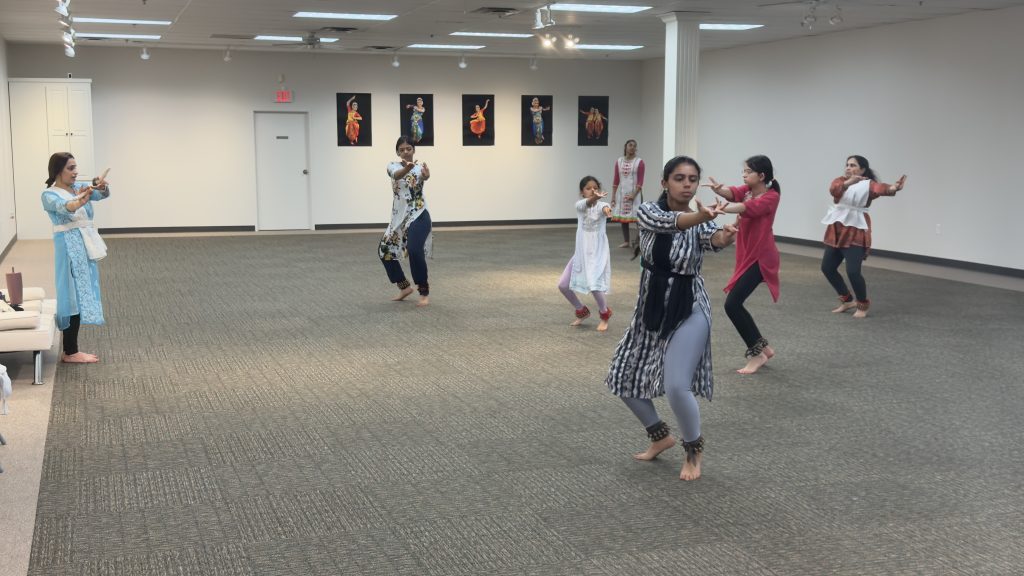
All are welcome. That includes boys, because modern Bharatanatyam is not just a female activity. Although traditionally men were the Gurus or played instruments and women danced, these roles have evolved over the years.
The art form remains: “Indian civilization has been around for thousands of years,” Ajay said. This dance form has outlived dynasties, fiefdoms, and empires, and it is prepared to prevail against any new obstacles.
—By Paul Horsley
To reach Paul Horsley, performing arts editor, send an email to paul@kcindependent.com or find him on Facebook (paul.horsley.501) or Twitter/Instagram (@phorsleycritic).
More Than Just Dance

Did you know a bharatanatyam dancer can burn about the same number of calories as a football player in just one hour? A bharatanatyam performance or even a one-hour practice can burn roughly 400–600 calories, comparable to a HIIT workout or a competitive sport.
What makes bharatanatyam unique, though, is that it’s not only about movement; it’s about precise muscle control. The aramandi position engages your glutes, thighs, and core. Nritya builds coordination and balance, while expressive abhinaya strengthens facial muscles and supports breath control. In other words, bharatanatyam isn’t just a performance art—it’s a full-body cardio and strength-endurance workout in disguise.
—Ketaki Ghanekar
