


When it comes to theater on LGBTQ themes from the last half-century, happy endings have been in short supply until recently. Before laws and attitudes began to change, the community walked a rough road. Literature, theater, and films wallowed in stories of death, disgrace, disease, mental illness, and/or suicide. Even plays such as The Boys in the Band (1968) traded on self-loathing and gallows humor: notwithstanding outcomes of personal growth and acceptance. Then in the 1980s and ’90s, works such as As Is and Angels in America brought AIDS into the mix, with increasingly dark results. (Granted, the final message of many of those shows was not entirely bleak.)

There have always been joyous, or at least upbeat, works onstage—even if they don’t always end in a conventional happily-ever-after. Here are a few works that, if not as fun as James Ijames’ Fat Ham, present a realistic picture of what is required to make one’s own happy ending. This is not a “best of” list, it’s just a selection. Some will have favorites, excluded here for one reason or another. A play whose resolution is closer to resignation than joy, for example, perhaps belongs on a different list.
Gemini: Albert Innaurato’s sweet-natured play opened at New York’s Helen Hayes Theatre in 1977 and ran for 1,819 performances—an astonishing Broadway run for any non-musical show. Set in South Philadelphia, it tells of working-class Harvard student Francis and his unrequited love for his well-heeled buddy Randy, and of the crush that Randy’s sister, Judith, has on Francis. Along the way the play shares a variety of well-crafted side stories about Francis’ friends and dysfunctional family. It’s all told with such a light touch that the happy ending feels like a natural (if unexpected) surprise. The Unicorn Theatre produced the play locally in 1983, an early step toward establishing its profile as one of America’s most adventurous companies.
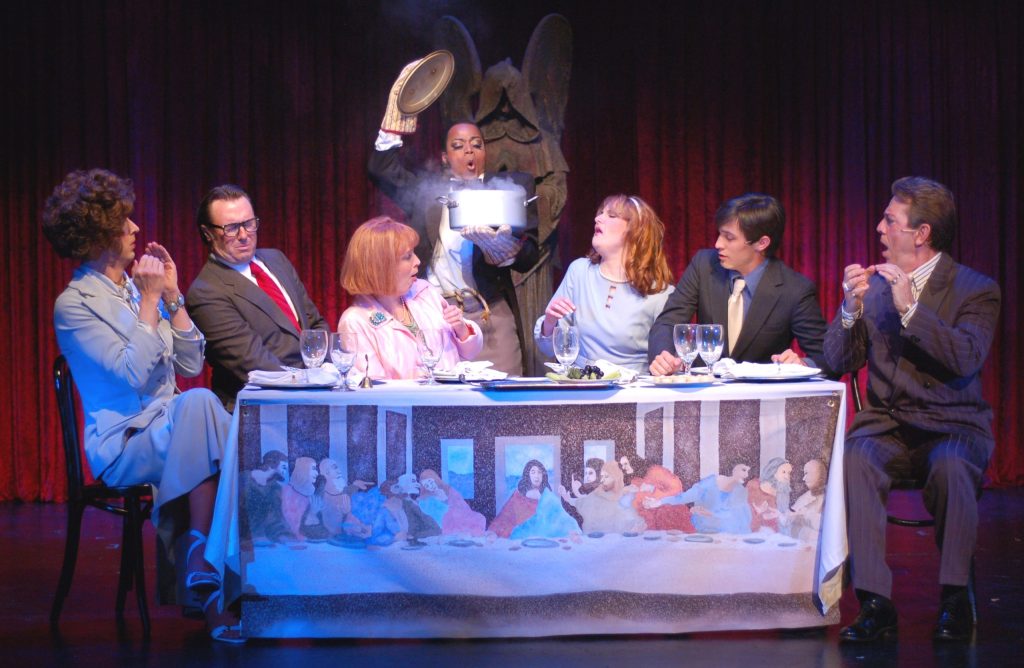
La Cage aux Folles: What began as a modest 1973 French play by actor-director Jean Poiret became the basis for Poiret’s own path-forging film version of 1978. Harvey Fierstein and Jerry Herman created an in-your-face musical adaptation, which opened in 1983 and ran for 1,761 performances. The happy household of club owner Georges and drag performer Albin is set on edge when their son, Jean-Michel, announces he is marrying the daughter of an ultraconservative (and scandal-plagued) politician. When the clueless senator and his wife come to dinner, Albin poses as Jean-Michel’s “mother.” A vein of genial wit runs through the show, and the finale is uncommonly high-spirited.

Beautiful Thing: Jamie loves Ste’, who wants to return the affection but fears his drug-dealing father and bully of an older brother. Even as recently as 1993, Jonathan Harvey’s West End hit Beautiful Thing, set in working-class London, was considered mildly scandalous for depicting high school boys who actually manage to form a successful relationship. The final scene, in which the Jamie and Ste’ slow-dance to Mama Cass’ Dream a Little Dream of Me in the courtyard of their housing project (to the shock, dismay, and amusement of their neighbors), is the sort of unfettered “boy meets boy” happy ending that to this day is still relatively rare in theater.
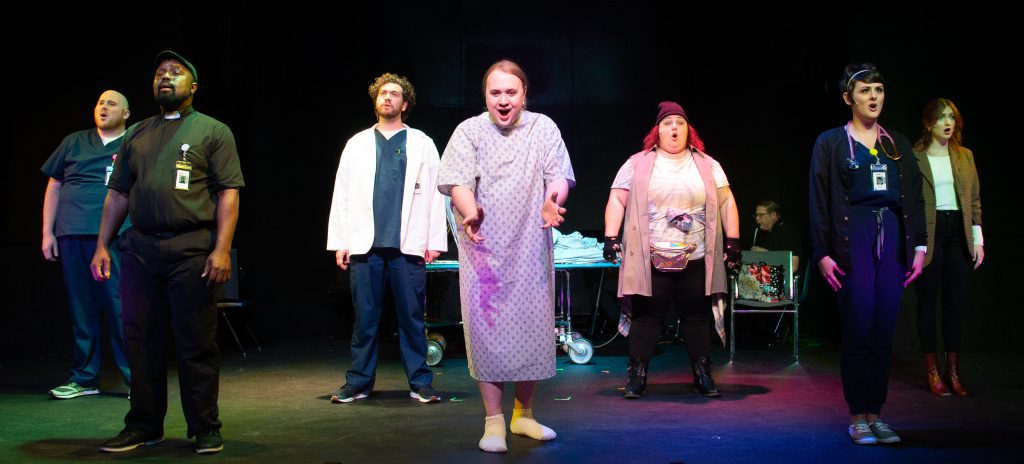
A New Brain: This odd piece of meta-theater by the powerful team of William Finn and James Lapine, which opened at Lincoln Center in 1998, recounts Finn’s own experience with an arteriovenous malformation, which required brain surgery both in the musical and in real life. The joy of this semi-happy ending is twofold: Post-surgery protagonist Gordon musters an even more fulfilling relationship with his partner than before, and he finds himself inspired to write songs with unprecedented facility. It won an Outer Critics Circle Award and was produced by Olathe Civic Theater Association in 2022.
Hedwig and the Angry Inch: This semi-autobiographical story by John Cameron Mitchell (off-Broadway, 1998) must count among the more outrageous pieces of American theater, but it has been assured a long life largely through Stephen Trask’s songs. Hedwig is a nonbinary East German singer who ends up in a trailer park in Junction City, Kansas—the victim of a botched sex-change operation who writes songs based on ancient mythology. In a complicated but surprisingly satisfying ending, Hedwig finds happiness when she forgives both of her exes, Tommy and Yitzhak, and accepts herself as genderqueer—“a gender of one and that is accidentally so beautiful,” as John Cameron Mitchell has said.

A Man of No Importance: Barry Devlin’s 1994 film is a largely unrecognized classic of gay cinema, and it’s not surprising that it inspired the dream-team of Terrence McNally, Stephen Flaherty, and Lynn Ahrens to adapt it into a musical. It opened at Lincoln Center in 2002 and among local performances was the Metropolitan Ensemble Theatre’s 2008 version starring the late Robert Gibby Brand. Alfie is a closeted middle-aged bus conductor in 1960s Dublin who forms an amateur theater company from his regular riders. Trouble begins when he determines to stage Oscar Wilde’s risqué Salome. In one of the most disarming happy endings ever, Alfie is “outed” but discovers that his bus friends—including his handsome straight buddy, Robbie—still love and support him.
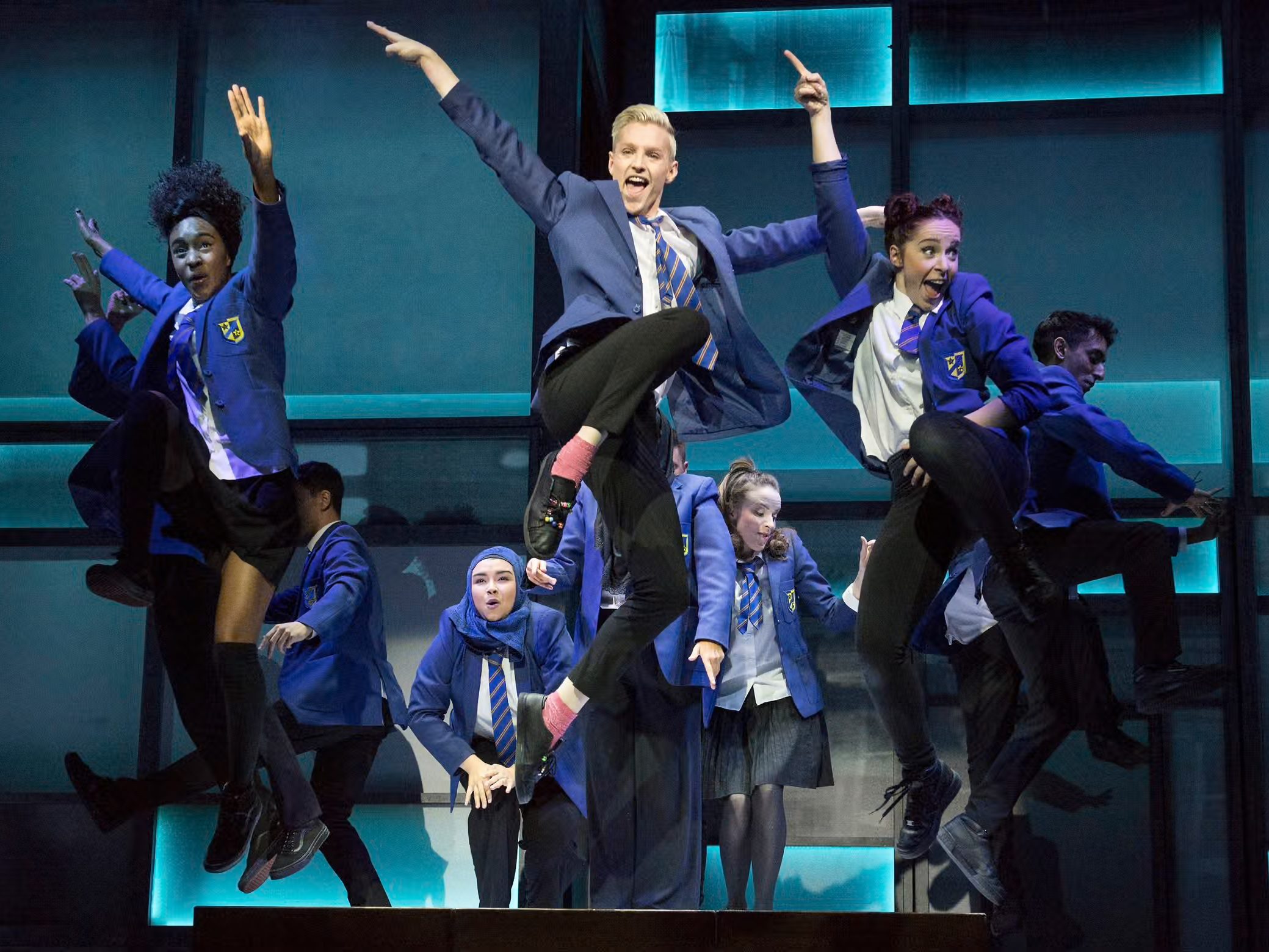
Everybody’s Talking About Jamie: Jamie is a gay high school student who wants to be a drag queen when he grows up: or better still, right now. Based on a documentary film, the musical by Tom McRae, Dan Gillespie Sells, and Jonathan Butterell had its West End premiere in 2017. In the end, 16-year-old Jamie is accepted by his classmates and, rather implausibly perhaps, walks onto the prom dance floor with the kid who has bullied him for years.
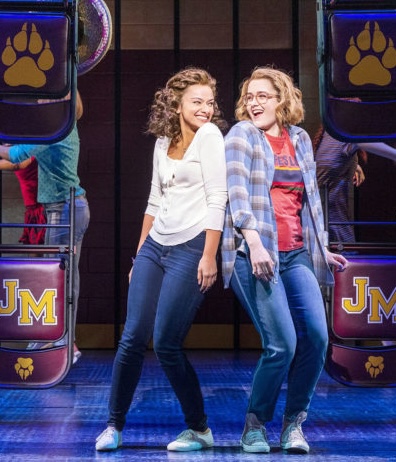
The Prom: Positive portrayals of lesbians were rare in musicals until works such as Fun Home (2013) and The Prom (2018) began to present serious portrayals. The authors of the latter (Matthew Sklar, Chad Beguelin, and Bob Martin) leapt into an increasingly common topic: Emma wants to take her girlfriend, Alyssa, to the prom, but the school board forbids it. The self-serving maneuverings of a group of clueless, well-meaning, but egotistical New York stars almost wreck the sweet conclusion. The show opened on Broadway in 2018 and was made into a rather tepid film in 2020.
A Strange Loop: Michael R. Jackson’s wryly witty musical tells the “metafictional” story of Usher, a queer Black playwright writing a musical about a queer Black playwright writing a musical about a … well, you get the idea. It won the author the 2020 Pulitzer Prize for Drama and two Tony Awards (Best Musical, Best Book of a Musical) and made it to Broadway in 2022. The play “tracks the creative process of an artist transforming issues of identity, race, and sexuality that once pushed him to the margins of the cultural mainstream,” wrote the Pulitzer committee, “into a meditation on universal human fears and insecurities.”
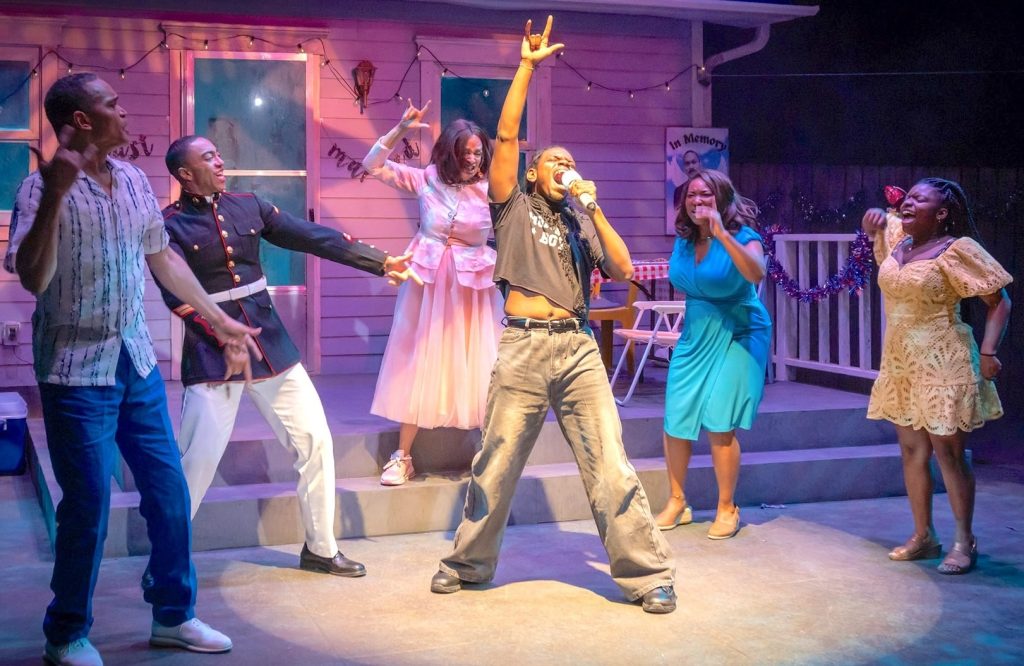
Fat Ham: Ostensibly a modern take on Hamlet, James Ijames’ comedy (which won the 2022 Pulitzer Prize) is about a young queer Black man, Juicy, who is visited by the annoying ghost of his father. For centuries folks have wondered whether Hamlet is gay. James turns the story into a comedy by settling that issue from the get-go: Not only is Hamlet/Juicy gay, but so is Ophelia/Opal. Thus nobody needs to die and no one has to go mad. In fact, Juicy ends up admitting his love for uptight Larry (Laertes), who also comes out of the closet. At the end, everybody dances. The Unicorn Theatre’s top-drawer 2025 production, directed by Tosin Morohunfola, was one of the most joyous evenings I’ve had in a theater anywhere.
—By Paul Horsley
