


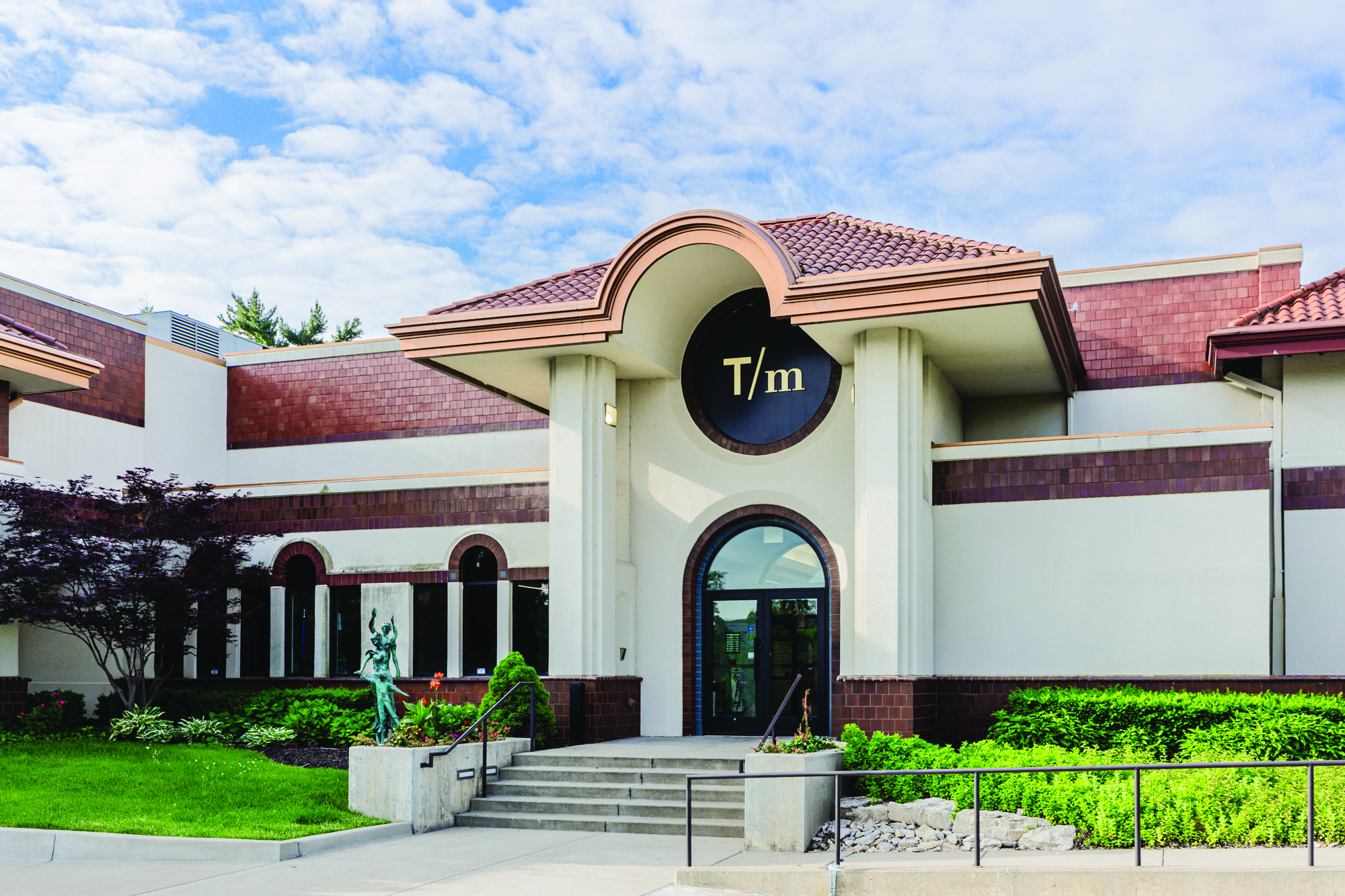
Sometimes the smallest items tell the biggest tales. Madeline Rislow, curator of the Native Arts in Miniature exhibition at the National Museum of Toys and Miniatures, understands what an impact tiny, handmade, historically accurate, miniature pieces can have on a visitor to the museum. “The exhibit explores diverse tribal traditions, family heritage, and creative innovations expressed by Native American artists working in miniature. We created a space that is not too large or overwhelming, so that the individual pieces can each be appreciated,” relayed Madeline. The staff at the museum has shown great care in showcasing a delightful collection of Native American cultural pieces, in the smallest of scales possible. These tiny, intimate pieces provide a large view into our shared land and culture.
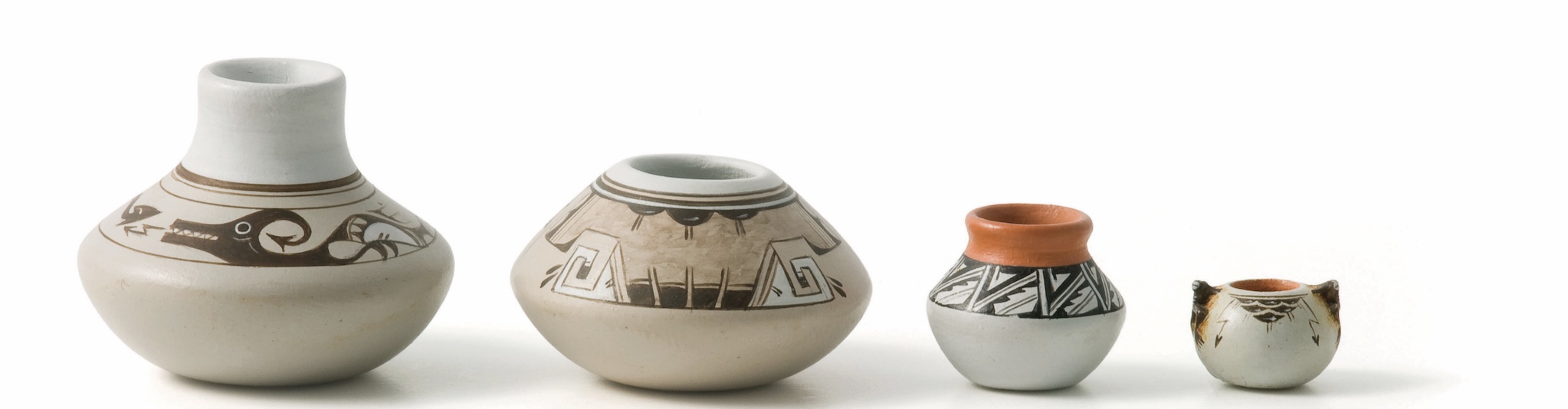
From painted pottery to woven baskets, from carved Kachinas to tiny weavings, and including contemporary takes on old themes, this show packs a punch when it comes to appreciating the delicate craftsmanship required to make miniatures. They are not just smaller versions of larger pieces. Each artifact is unique in its own right. Some have been made to a specific scale, while others are just creative, small interpretive pieces. But all of the items in the show reflect the history, the culture, the upbringing, and the struggles and joys of life as a Native American artist.
What is required of the visitor to this special, small world is a willingness to be quiet and patient and actually spend some time taking in each piece, as well as listening to the short, but intimate artist videos provided. Following a cursory walk-through, it was time to dig in and find the pieces that called out to us. We came up with some favorites, and what follows is a bit of history and an explanation about some of them.
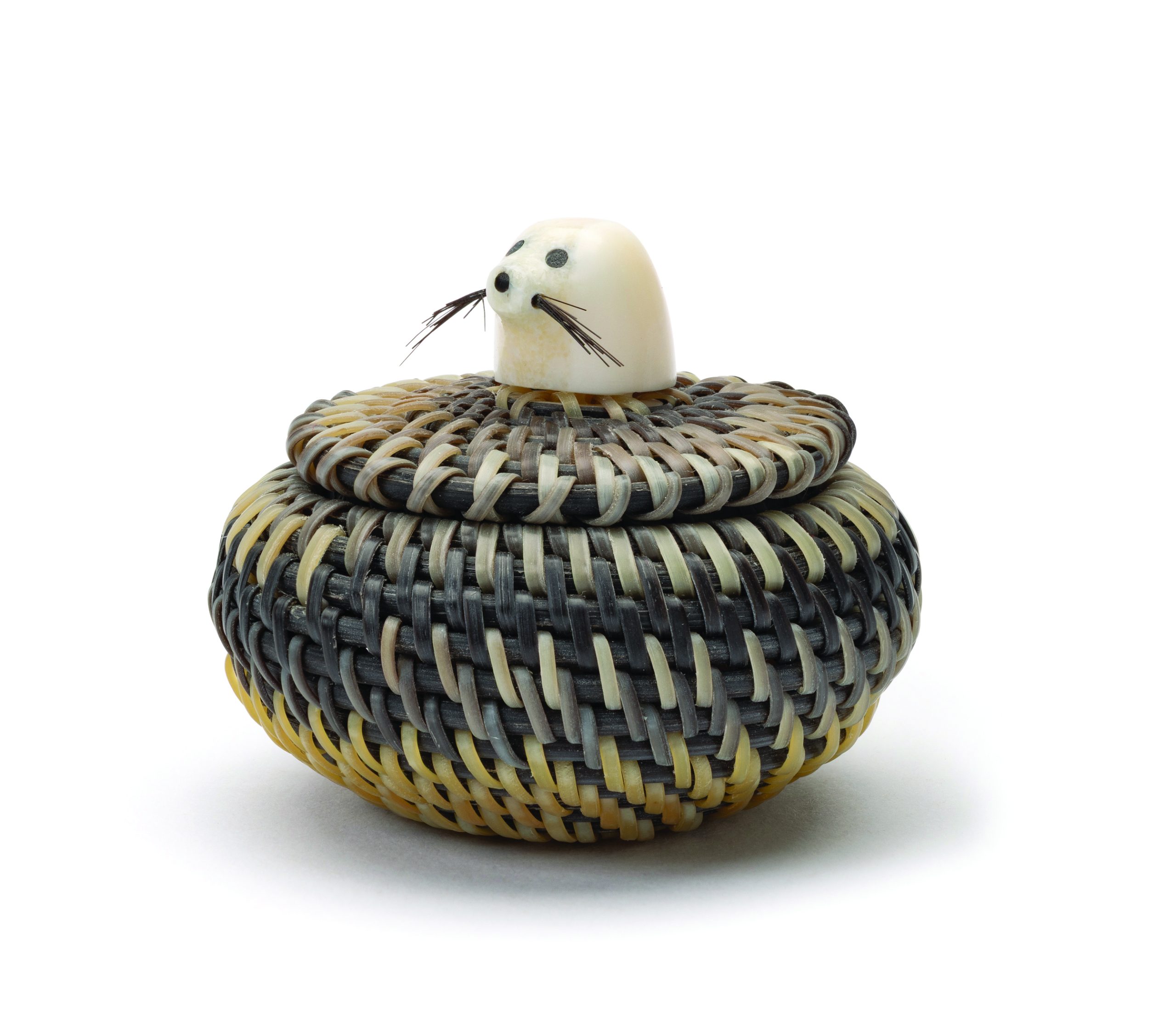
- The Baleen Basket – The artist, Don Johnston, said of it, “Alaskan Natives hold hunting and whaling rights by international and federal laws. The baleen and ivory used here come from animals, bowhead whale and walrus, that are hunted for food to sustain these Alaskan communities. Since all parts of the hunted animals are used, these activities also support the perpetuation of traditional art forms.”
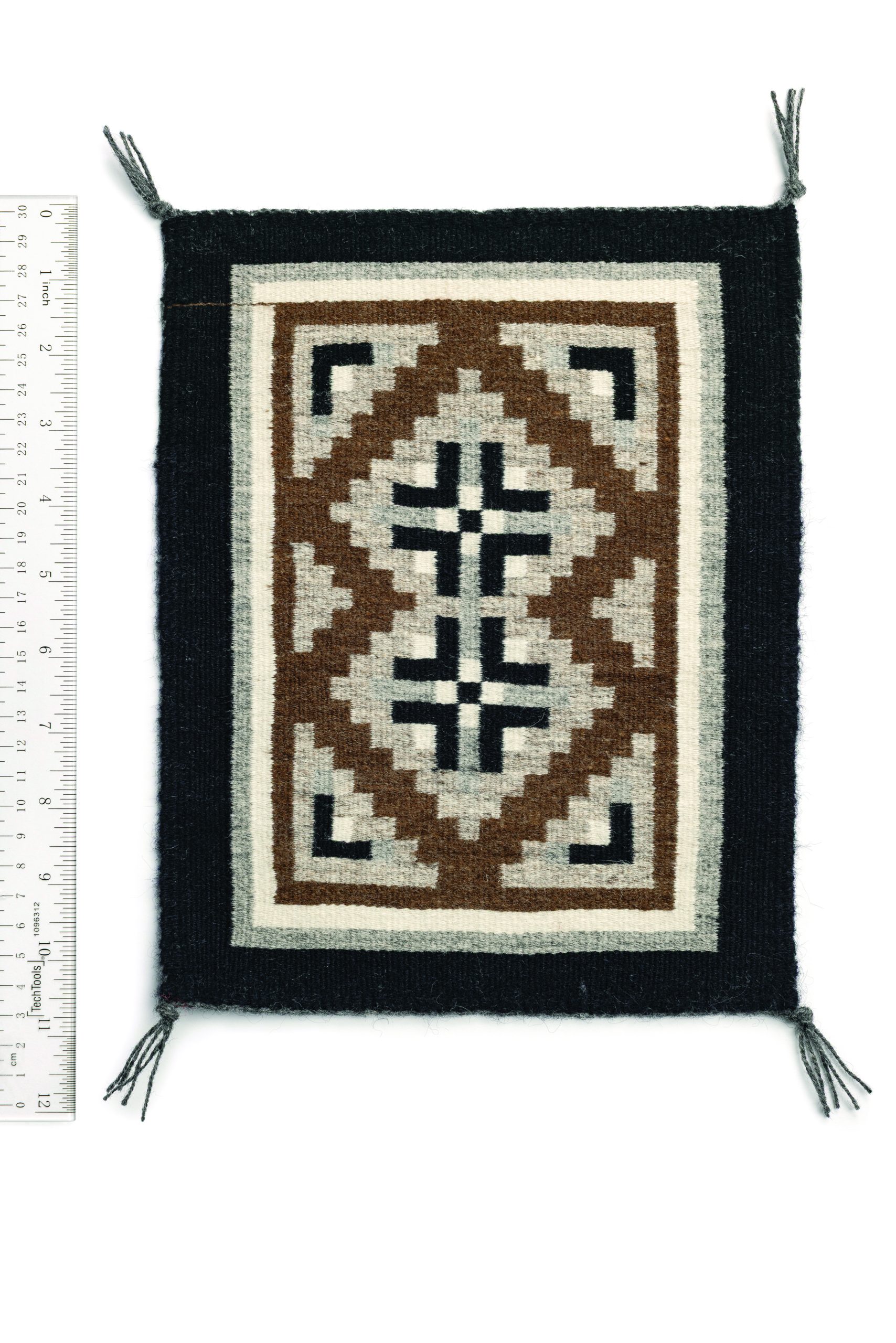
- Two Grey Hills Tapestry – The artist, Michael Teller Ornelas, said, “People ask me, ‘is this piece an example of a larger rug in the back?’ (It is not.) I was drawn to miniatures because I enjoy experimentation and exploration. They give me a depth of freedom that isn’t afforded in large textiles.”
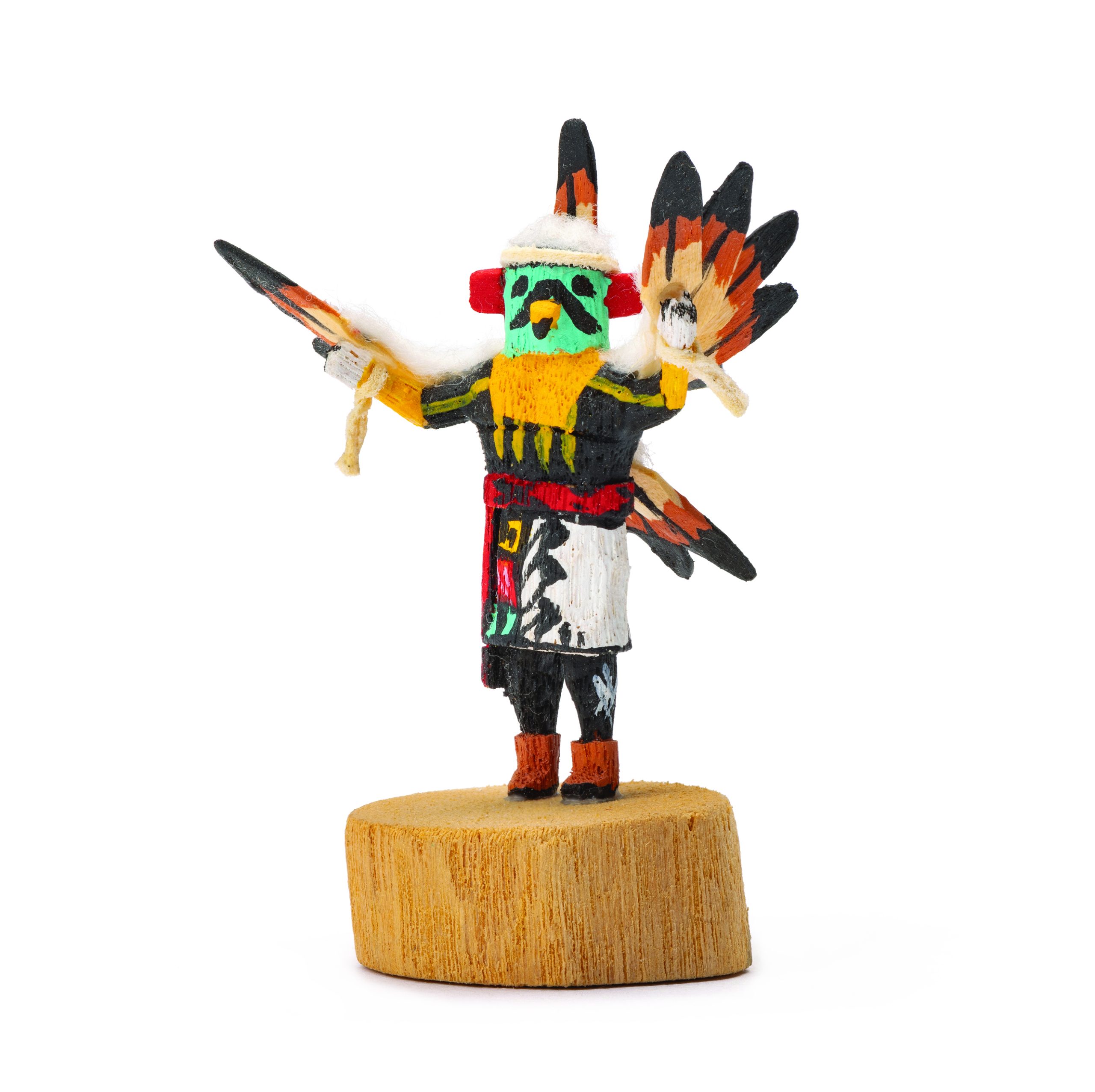
- Turkey Katsina Carving – These carvings (we now refer to them as Kachina) have been a part of Hopi culture for several centuries. They represent Katsinam, initiated Hopi men who embody the deities while dancing in ceremonies to bring good things to the community: rain, prosperity, and health. Miniature versions are a more recent art form, dating from the 1970s.
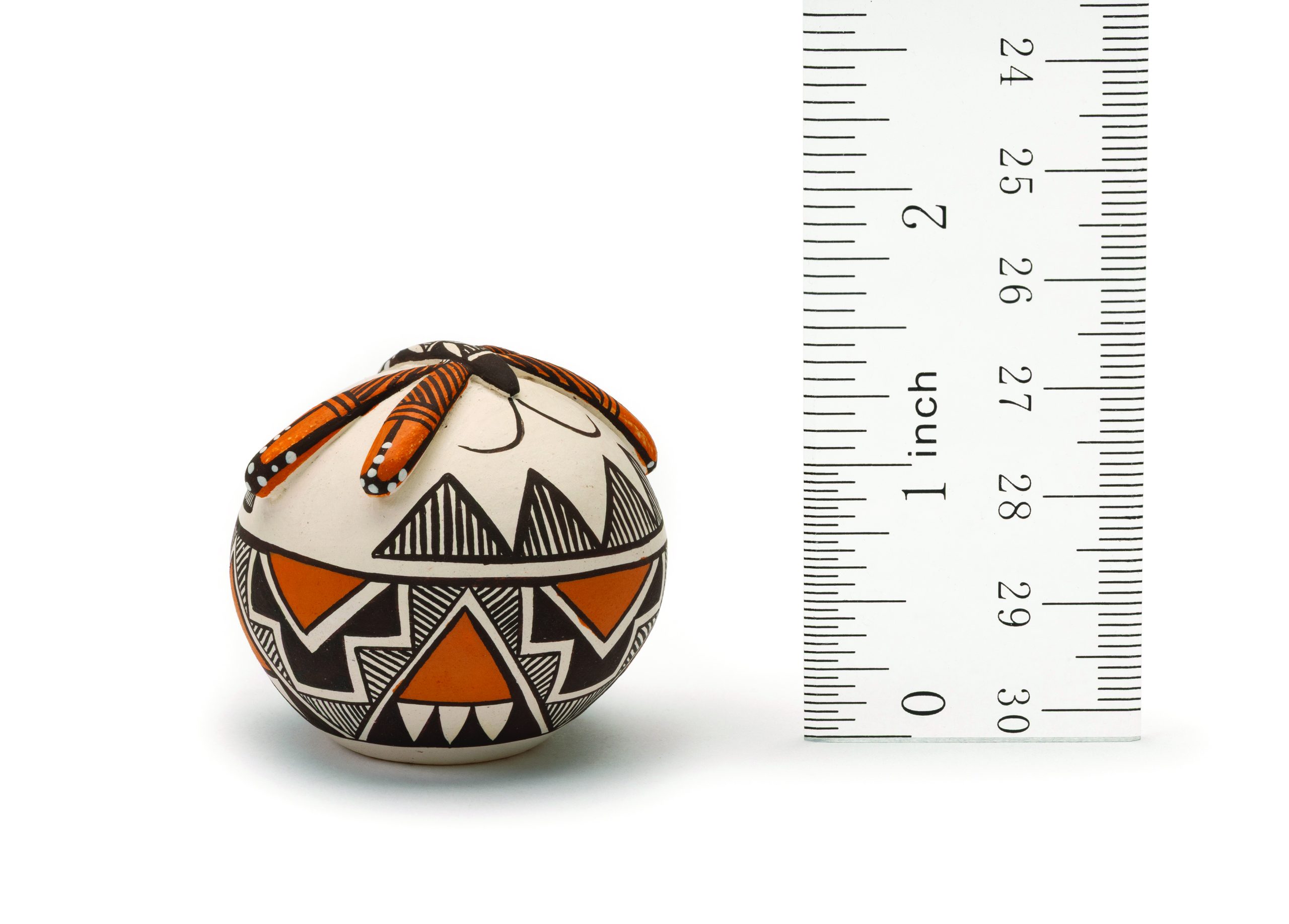
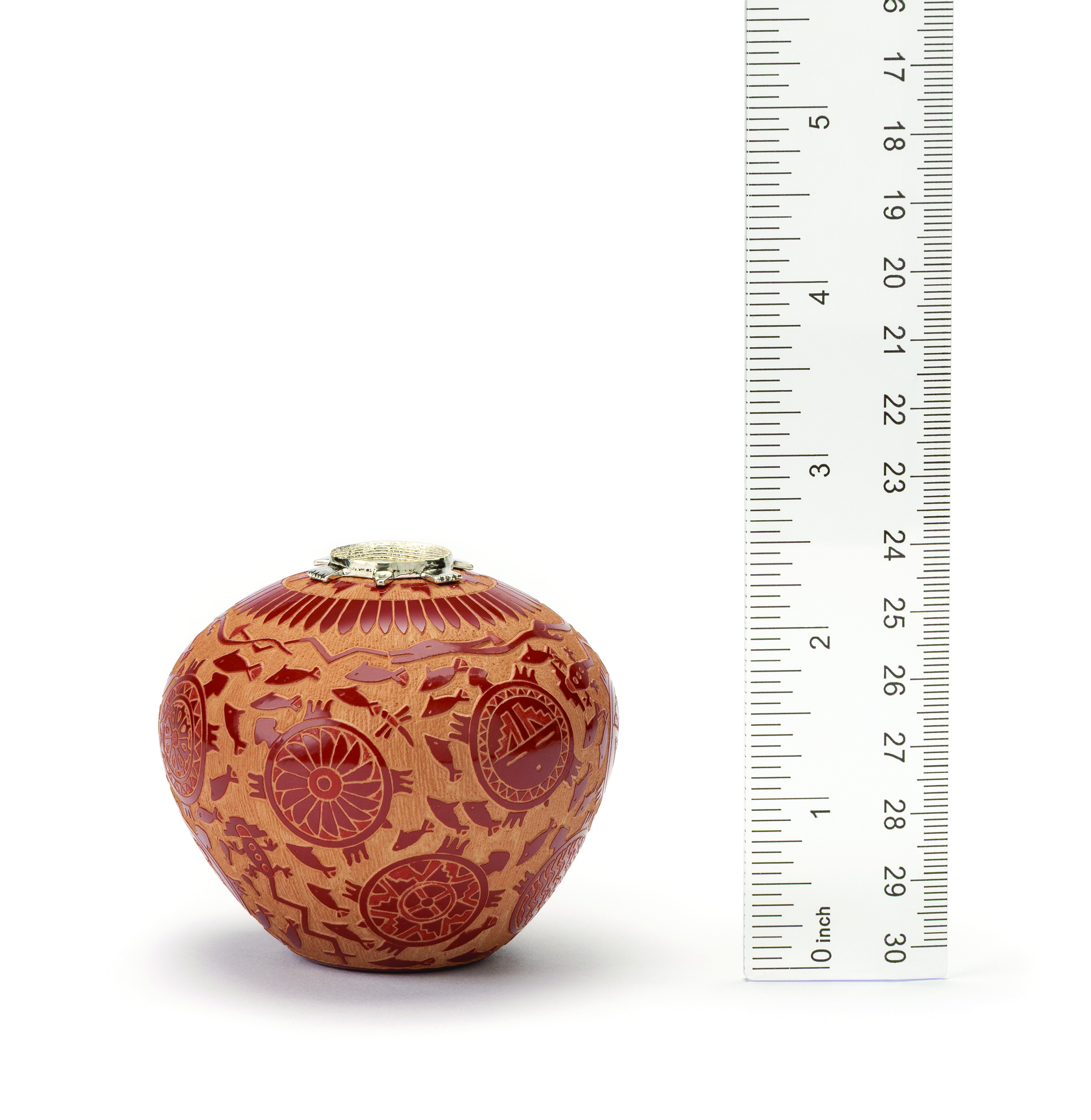
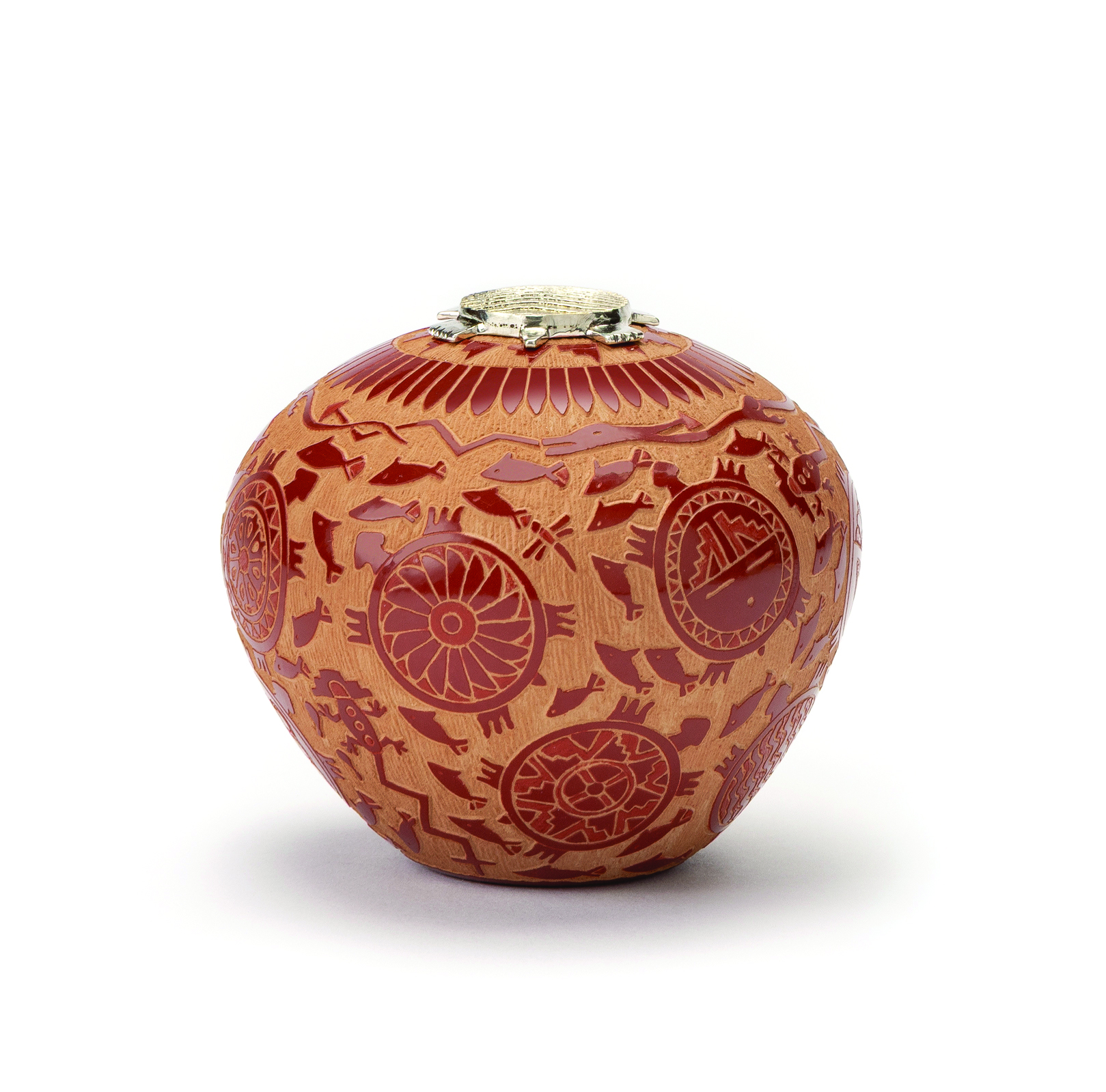
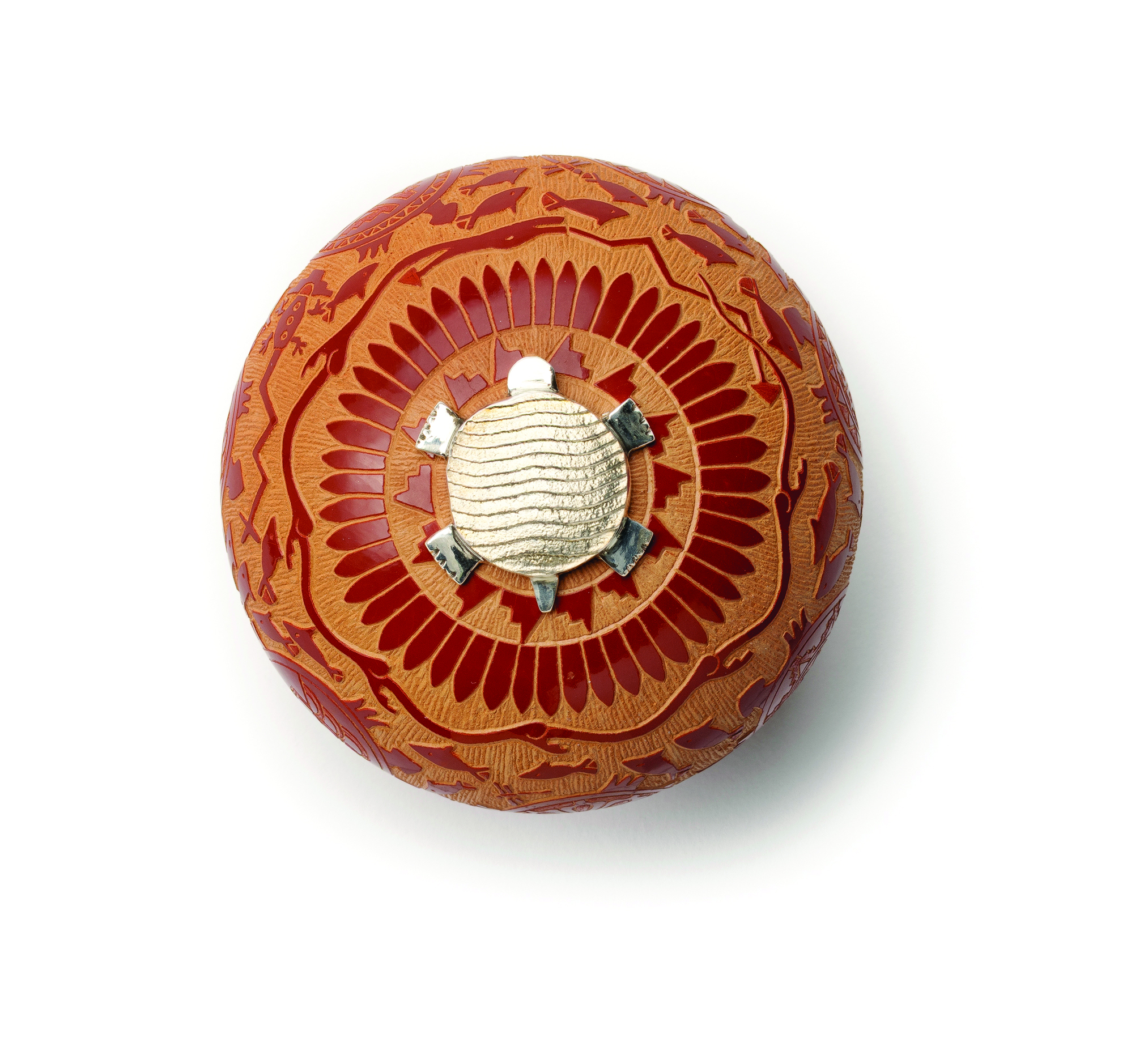
- Seed Pot with Etched Water Designs and Silver Turtle Lid – This is such an intriguing piece! Preston Duwyenie and his wife Debra Duwyenie create gorgeous pieces of pottery in all sizes. Preston is from the Hopi village of Hotevilla, Arizona, which provides the ideas and expressions in his work. Seeds are important to planting, water is scarce, and his silver turtle represents the precious lifeblood of water. His works are signed with, “Loma-i-quil-va-a,” or “Carried in Beauty,” the name given to him by his Godmother following an initiation. His work in miniature is simply inspiring. The Gallery Guide provided by the museum tells us, “Miniature pottery, as defined at the Santa Fe Indian Market, the premier annual Native American art show, must be three inches or less in all dimensions.
- Baskets are among the earliest examples of Native American artwork. Functional and beautiful, they have a legacy in Native culture, and miniatures were being made as early as the 1880s.
Located on the campus of UMKC in the historic Tureman mansion, the museum was founded in 1982, when co-founders Mary Harris Francis and Barbara Marshall decided to blend their collections of toys and miniatures. The mission of the museum is, “to educate, inspire, and delight people of all ages by collecting, displaying, and interpreting toys and miniatures that illuminate diverse narratives and cultural heritage.” Barbara’s love of the genre allowed the creation of a museum, and it was the continuation of her work to recognize fine-scale miniatures as an art form. Today, the collection that Barbara Marshall built is the largest collection of fine-scale miniatures in the world. Mary Harris Francis’ passion was doll houses and toys. Many of the toys in the collection retain their original provenance, and these stories enhance our understanding of their historical importance.
We are fortunate to have such a treasure in our midst. With an enormous permanent collection, and captivating exhibits, this is the perfect place to spend some time being up close and personal with pieces that will take anyone instantly back to their childhood! Be prepared to be mentally transported in time. Visit toyandminiaturemuseum.org for more information.
Featured in the November 14, 2026 issue of The Independent.
By Anne Potter Russ
