


Nearly everyone knows Oklahoma! but not many outside the theater world are familiar with Lynn Riggs’ Green Grow the Lilacs. The Pulitzer Prize-nominated play by an Oklahoma-born Cherokee-American author was the direct source of Rodger’s and Hammerstein’s classic, yet in the century since its Broadway premiere it has yet to be revived there.
Oklahoma!, in contrast, after an initial run of 2,212 performances, has received five high-profile Broadway revivals and thousands of productions worldwide.
Green Grow the Lilacs (which starred June Walker, Tex Ritter, and Lee Strasberg) closed after two months and very nearly became a footnote of history. Yet it contains veiled but valuable commentary about Native American life on the plains (the protagonists are themselves Natives) that has largely been overlooked.
To be sure, Oklahoma! remains a great American musical. But the manner in which it upended Riggs’ themes and virtually erased the memory of its source is emblematic of a larger trend in American culture: a one-sided view of history.
While Rodgers and Hammerstein’s work portrays the tension between white cowboys and white farmers, Riggs’s play emphasizes the tension “between Cherokee community-based ways of life and the way of life that is infiltrating Indian Territory, as non-Native people come into the region,” as Christy Stanlake, a scholar of Native American theater, wrote. “Literally, the Cherokee community is being overrun by the ideals of Manifest Destiny.” All this is lost in the musical’s (albeit authorized) adaptation.
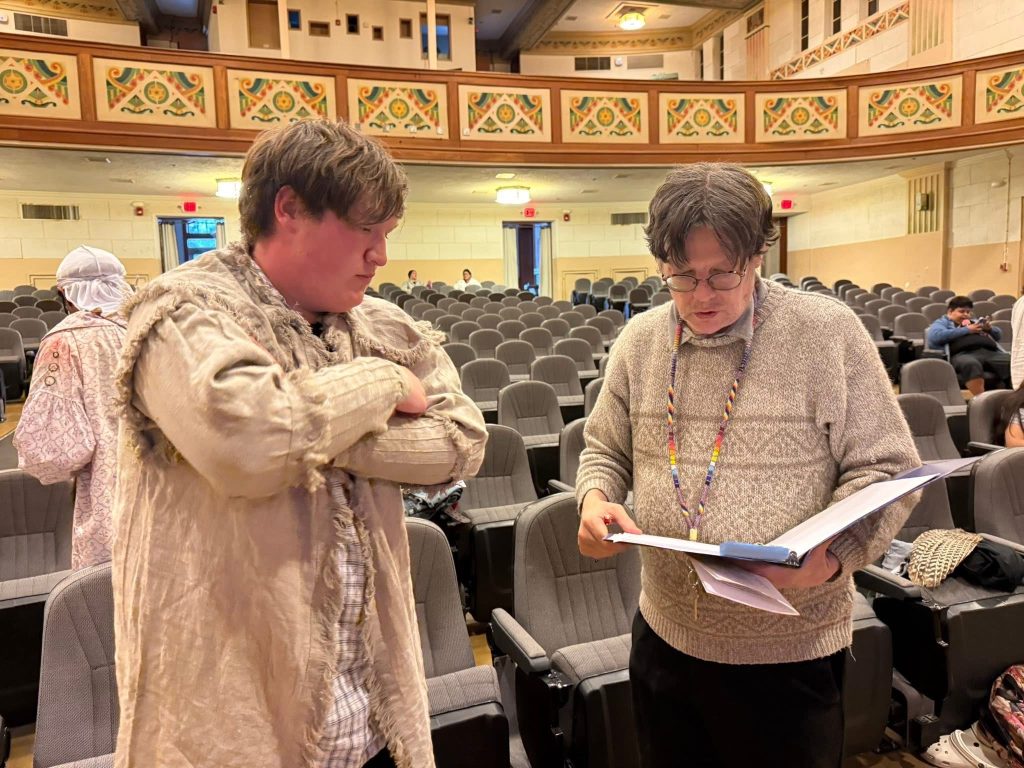
European Americans have been usurping Native American stories for centuries, but thanks to recent changes in American literature, theater, and media, the era of “appropriation” is waning. Today more than a dozen theater companies throughout the United States have dedicated their efforts to producing theater by and about Native artists. One of the oldest and most venerated of these is Thunderbird Theatre, located on the Lawrence campus of Haskell Indian Nations University.
“Every nation in the world deserves to tell, and perform, its own story, and that includes Native American nations,” said Ben Furnish, professor of theater at Haskell and faculty advisor to the company. “I passionately believe that Haskell, Indian Country, and the wider American theater community need Thunderbird Theatre.”
Native American theater is spreading, and its stories and playwrights are finding new traction. In addition to the half-dozen or so major companies based in New York and California, there are companies in Alaska, Seattle, Minneapolis-St. Paul, New Mexico, Ohio, and Oklahoma. (See list below.)
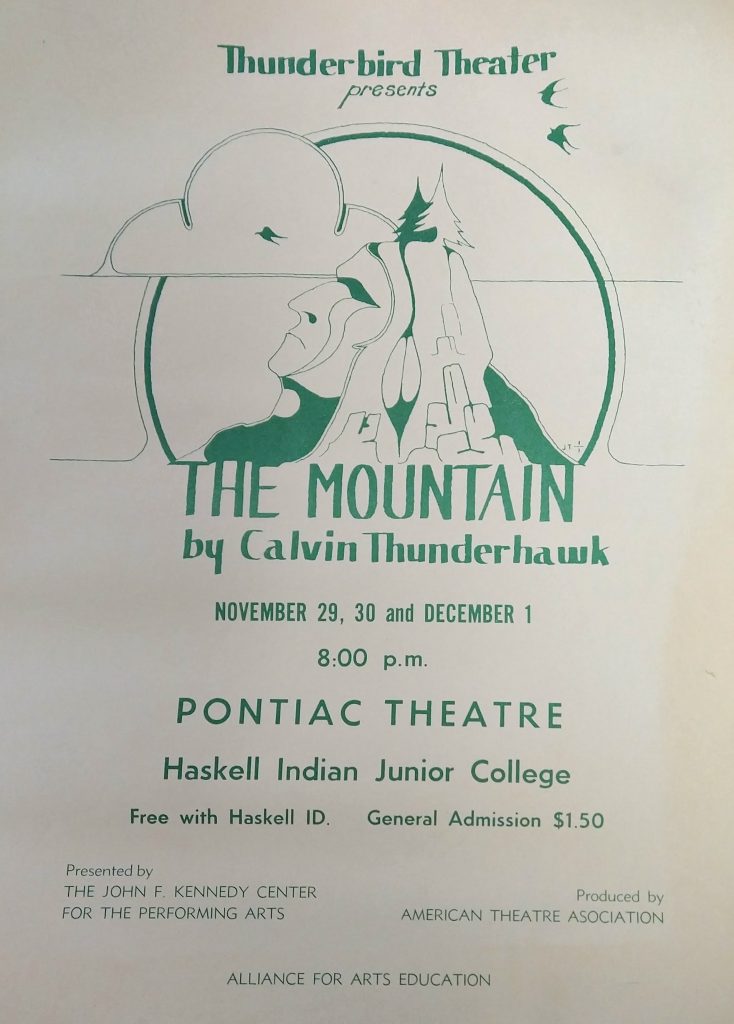
Thunderbird Theatre was founded in 1975 as a non-profit student organization and has played a vital role in Native theater for decades. After a few fallow years in the wake of COVID-19, it has recently roared back to life and is again producing exceptional work.
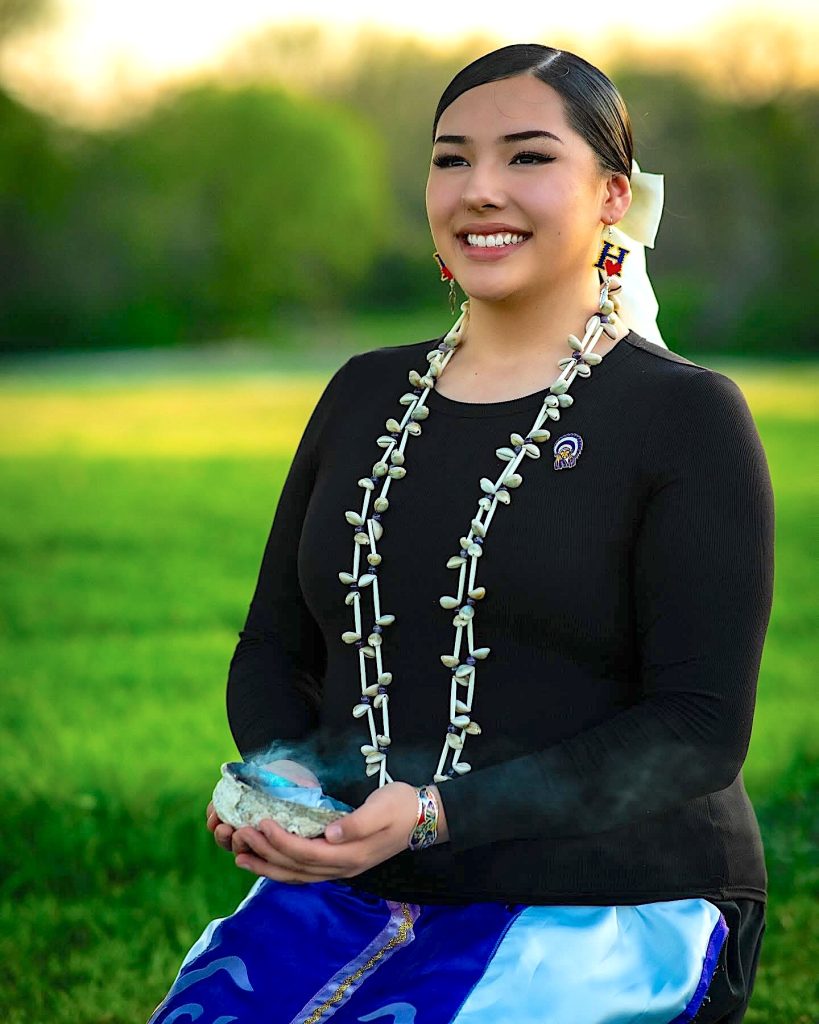
Thunderbird company members “have an opportunity to change the narrative, and to be accurate in their portrayal” of Native life, said actor and Haskell student Allison Levering (Winnebago Tribe of Nebraska). “Accuracy matters to us, because we have been silenced for so long.”
In addition to being artworks in and of themselves, the plays Thunderbird produces are also a means of “informing the public, informing non-Natives, about our histories,” Allison said. “Representation and accurate portrayals of Native Americans are ways that we can work towards being treated as equals.”
Allison, a media-communications major who is also an anchor on the award-winning news platform Good Morning Indian Country (KJHK 90.7 FM and on the web, a joint venture of Haskell and The University of Kansas), is part of a seventh generation about which tribal teachings have foretold “will take back the narrative, so that we can become part of society, be respected and seen as equals.”
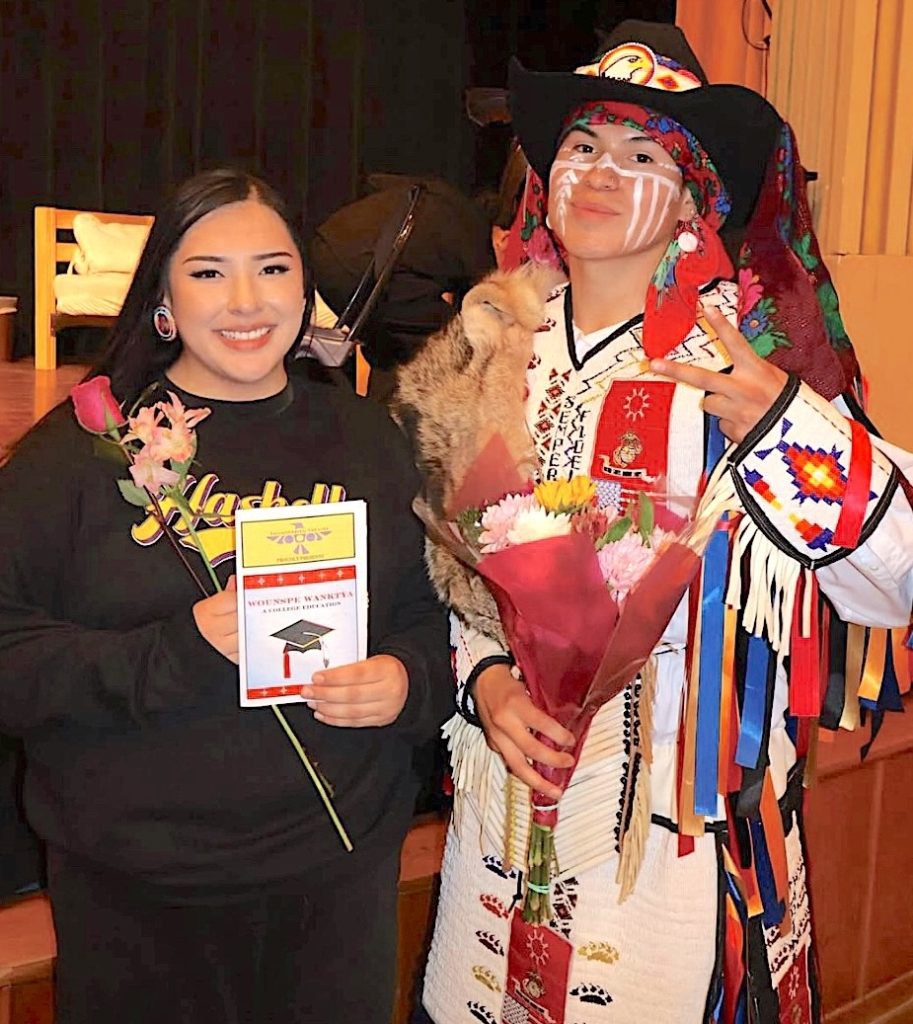
This indeed appears to be happening, most visibly in film and television (Rutherford Falls, Dark Winds), but also in theater and literature. “I had always wanted to be in movies, and I was a big movie watcher growing up,” Allison said, adding that until recently she “had never seen indigenous women represented in roles that were culturally relevant. I didn’t see Natives playing Natives and wondered why. … That curiosity led me to Thunderbird.”
Thunderbird was founded by Pat Melody, a faculty member who led it for three decades, and it continued under her successor, Dianne Yeahquo, until her retirement in 2017. They toured and gathered renown nationally: Among past achievements are appearances at the Kennedy Center’s Millennium Stage series and at the National Education Association’s 1998 International Board of Directors Conference in Washington, D.C.
“In addition to staging and sometimes ‘indigenizing’ plays from the Western canon such as Shakespeare’s The Tempest,” Ben said, “Thunderbird was also an important venue for such Native playwrights as Bruce King, Mark Anthony Rolo, Vickie Ramirez, Marcie Rendon, Tomson Highway, and many others.” Two significant shows, M. Scott Momaday’s Children of the Sun (based on an ancient Kiowa epic) and its original Songs of Life, became regular productions “that evolved from year to year as each cast member brought their own contribution to them,” Ben added.
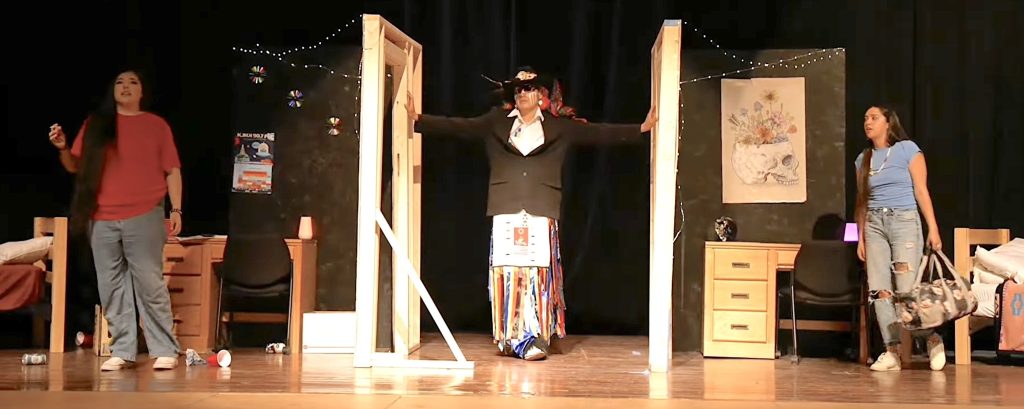
In 2023 Haskell began offering theater courses again, and in 2025 Thunderbird Theatre presented a staged reading of Shawnee Living History Tour, in collaboration with Caesar’s Ford Theatre in Ohio. (It was recently made into a 40-minute feature film Stomping Freedom.)
The success of that venture led to a staged production of Alexandra Hesbrook Ramier’s Wounspe Wanktya: A College Education this past April, a witty and moving play about student life at a Native American university: the spiritual and cultural hurdles, the plagues of addiction and depression, and the guidance offered by tribal traditions and practices. Thunderbird actors were joined by the Haskell Chorus, traditional drummers, and a newly formed Haskell Band. (You can view the production at YouTube.com/watch?v=UZFkHo8LD9s.)
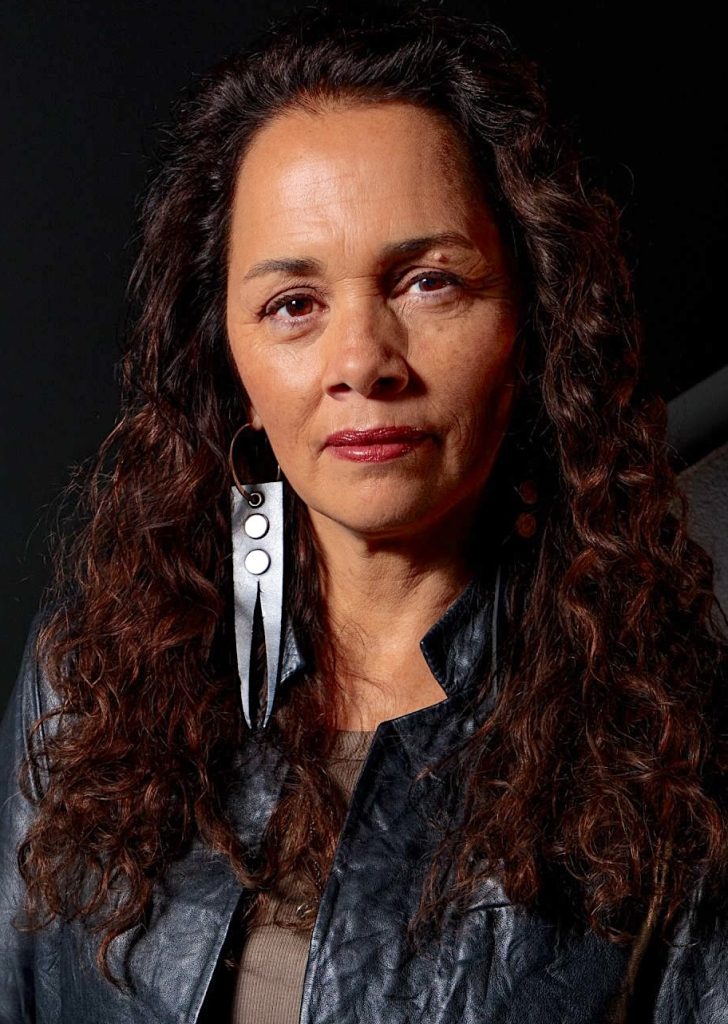
Renewed enthusiasm for theater among Haskell students appears to have inspired the university to consider expanding its degree programs. The College of Humanities and the Arts “may revive eventually its theater emphasis in its Associate of Arts liberal arts degree program,” Ben said. For the spring of 2027, Thunderbird is planning to stage Marcie Rendon’s Sweet Revenge, a Native-centered crime comedy that opened this October in Minneapolis.
In addition, “the community of Native playwrights is growing,” he added, underscoring the contributions of Larissa FastHorse (whose The Thanksgiving Play became the first work by a Native woman to reach Broadway), Mary Kathryn Nagel (Sliver of a Full Moon), and Madeline Easley (Representatives of Those at Peace).
“Storytelling is at the root of all this,” Allison said. “We are storytellers, and the oral tradition is what has preserved our language and our culture through this many generations: Despite genocide, storytelling is the reason why our beautiful culture is still prominent today.” Many students arrive at Haskell “wanting to learn more about their culture and their indigenous identity … to uncover who they really can be. And Thunderbird Theatre is one of the avenues they can take to truly find themselves.”
—By Paul Horsley
For more information about Haskell and Thunderbird Theatre, go to haskell.edu/academics/theater. To reach Paul Horsley, performing arts editor, send him an email (paul@kcindependent.com) or reach him on Facebook or on Instagram or X (@phorsleycritic).
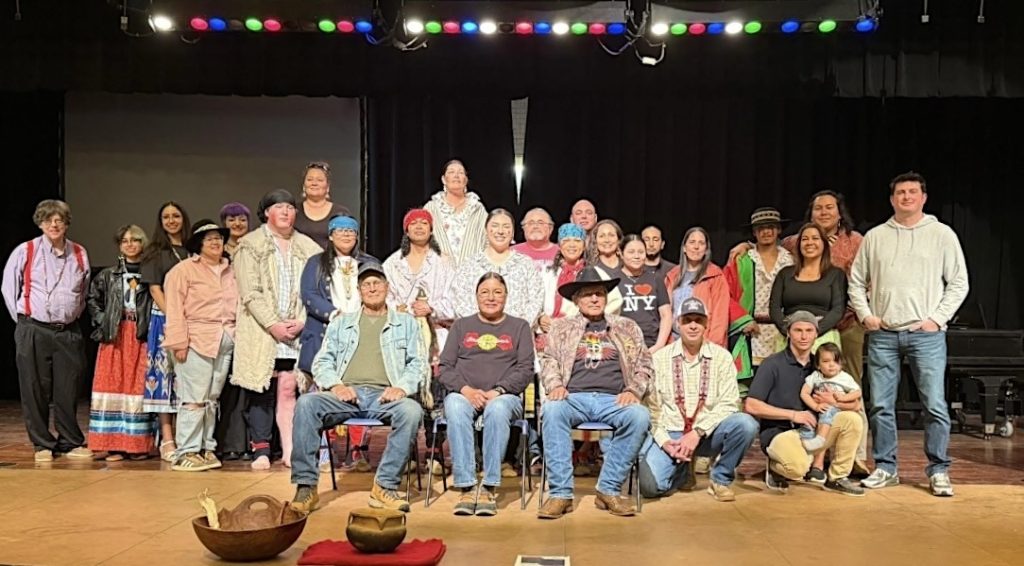
Some prominent Native American theater companies
AlterTheater (San Rafael, California): altertheater.org
Amerinda (American Indian Artists) Inc. (New York City): amerinda.org
Caesar’s Ford Theatre (Xenia, Ohio): cftohio.org
Eagle Project (New York City): eagleprojectarts.org
New Native Theatre (Twin Cities): newnativetheatre.org
Oklahoma Indigenous Theatre Company: okindigenoustheatre.org
Raving Native Productions (University of Minnesota)
Red Eagle Soaring (Seattle): redeaglesoaring.org
Safe Harbors NYC: safeharborsnyc.com
Spiderwoman Theater (New York City): spiderwomantheater.org
Thunderbird Theatre (Haskell University)
Turtle Theatre Collective (Twin Cities): turtletheatercollective.com
Two Worlds Theatre (Albuquerque, New Mexico): sharenm.org/two-worlds
Yale Indigenous Performing Arts Program (New Haven): yipap.yale.edu
