


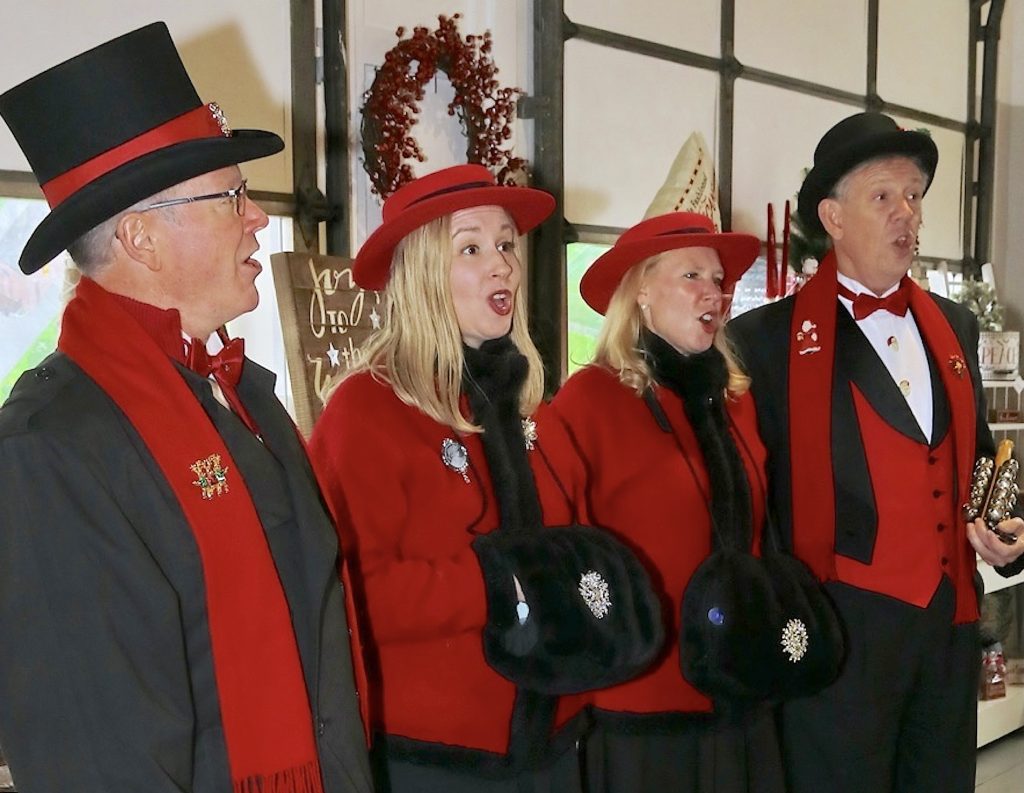
A carol is defined simply as a familiar religious song. But at the heart of the most ancient carols is a fundamentally human message of light and life. Carols speak of hope for a brighter future during the darkest period of the year, a sentiment that is shared in all parts of the world and by all religions.
Though most of the carols we hear and sing during the holidays are Christian in origin, an increasing number are contemporary in outlook or even secular in theme. Whether we call them carols or not, most carry a message of comfort, hope, and joy.
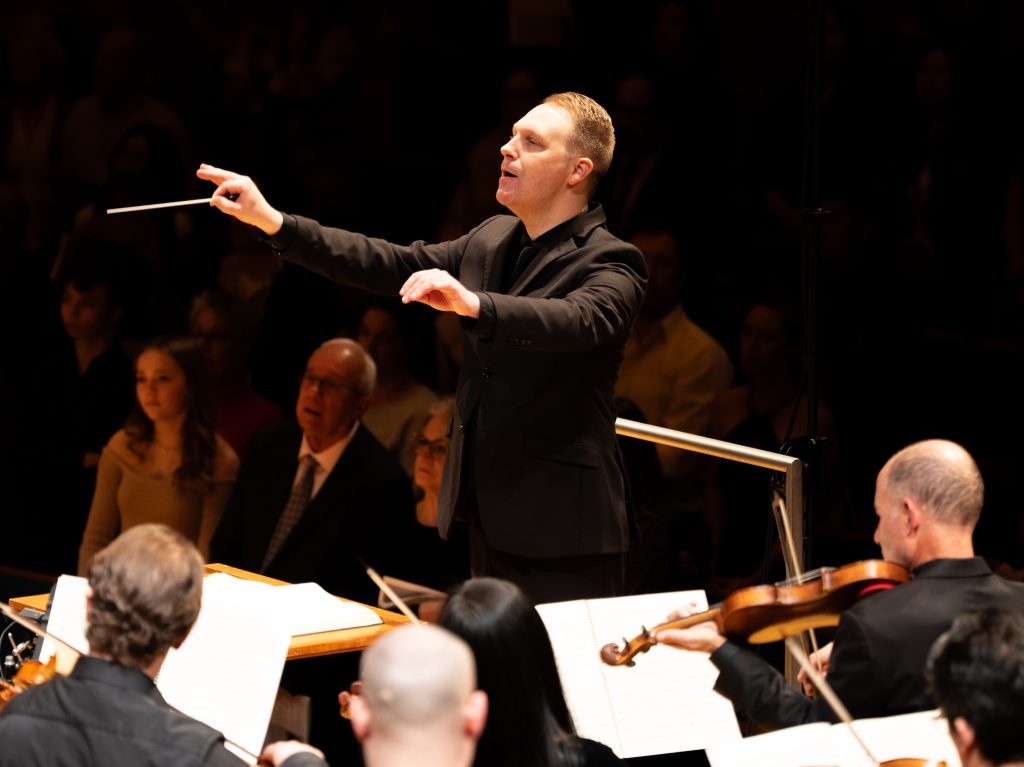
“Carols are stories, they are cultural experiences that break down social classes,” said conductor Ben Spalding, who founded the Spire Chamber Ensemble here in 2010. Ben was a student in Cambridge, England, of the great choral director, organist, and composer David Willcocks, who wrote many of the carol arrangements we hear today.
“It’s exciting for conductors, when we program carol concerts, to be able to weave the story of what Christmas means, what the holidays mean, what the Winter Solstice means,” Ben said. Most holiday concerts involve some type of audience participation, and “if people sing anything today, they can probably sing more carols than anything else.”
Carols are not just for listening, and they’re not just background music at the mall. They are for singing. The act of singing together, whether in a religious context or not, is a dwindling art in America—and many believe that its loss has left a void.
“Communal singing is something that we’ve been doing for the whole of human history,” said Ben, who also leads a stellar period-instrument Messiah each year. Not only is it fun to sing in a group, but evidence has shown that “heart rates sync up, brain waves sync up” in a choir, Ben added. “Science is starting to reveal some of the great benefits of group singing.”
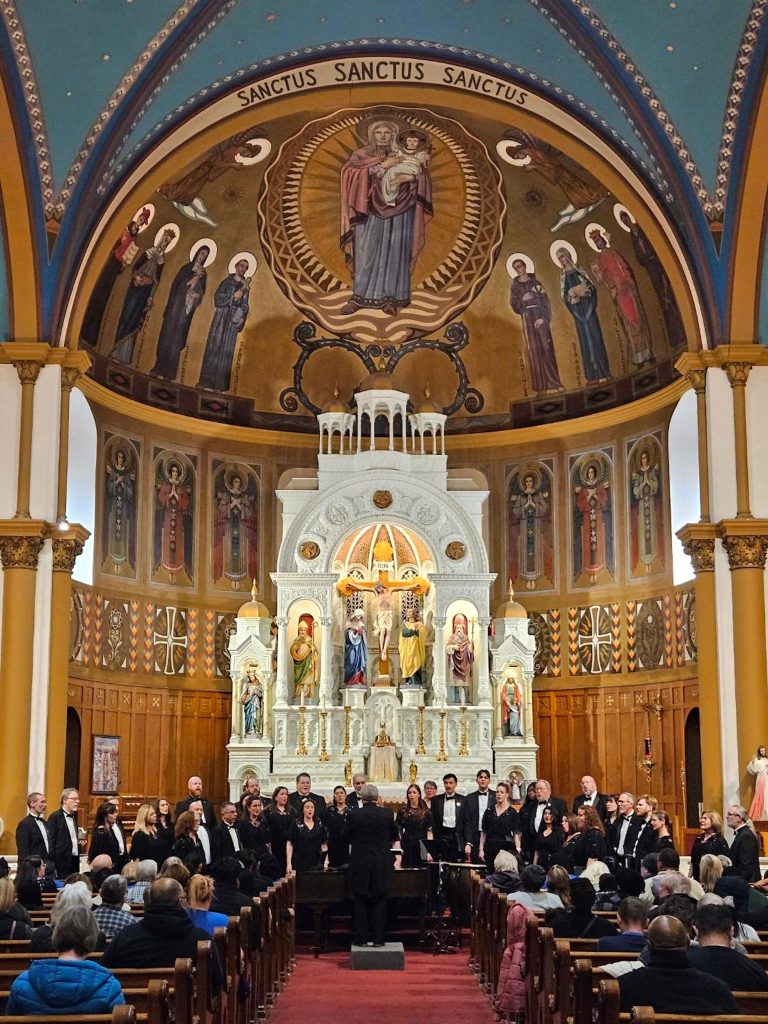
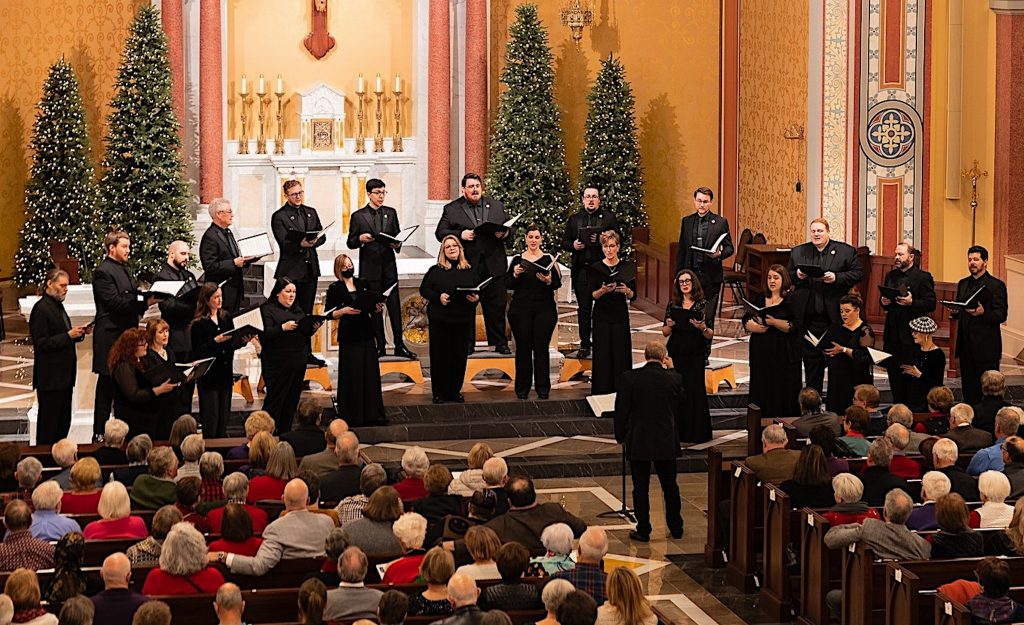
Several of the most avidly attended holiday concerts in Kansas City involve carols: Some even have the word in their title. This December 14th and 19th, the William Baker Festival Singers perform their Candlelight, Carols & Cathedral for the 28th year in a row, on program that not only features an audience singalong but also fills the downtown cathedrals to the rafters.
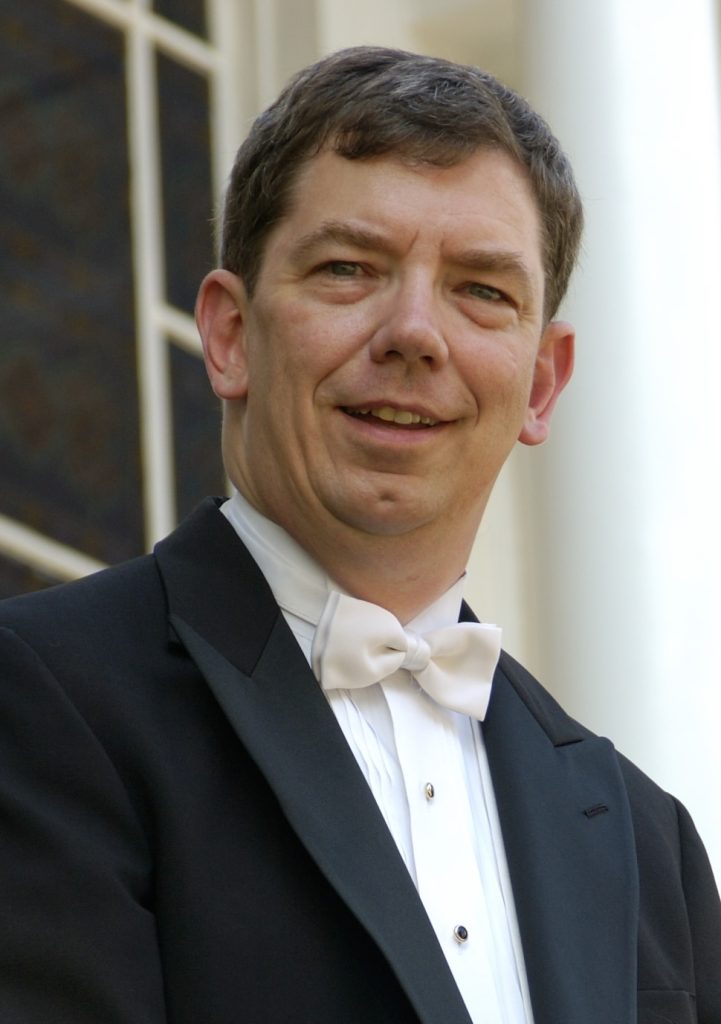
On December 15th and 16th, Te Deum presents Carols of Olde, with English carols from the 15th century to today—sung by the choir and by the audience. On December 16th, the Kansas City Chorale presents Benjamin Britten’s A Ceremony of Carols, a 12-movement setting for chorus and harp composed during World War II. Of course carols will also be sung at local concerts and services, and in synagogues around the city, Hanukkah will be celebrated with sacred songs as well.
The Baker choir offers an “alternative to alternative Christmas celebrations,” said its founding artistic director, William Baker, who started the group in 1998 and whose Choral Foundation now runs 13 ensembles in four states—including summer choirs, a handbell group, and a choir focusing on Jewish musical traditions. “The organ, the candles, the well-polished choir, the carols that we sing in the traditional forms, the music that tells what I consider to be the greatest story ever told … this is the place to find your love of tradition.” William is not opposed to innovation or to challenging tradition: “But Christmas is not the time to do that.”
Holiday concerts and religious services are not the only places you can hear carols, though. Many Kansas Citians still embrace the idea of traditional “caroling,” of going door to door to cheer up friends and neighbors, or perhaps less mobile members of the community. This is related to ancient traditions of “posadas” or “wassailing”—of taking well-wishes door-to-door in exchange for a hot drink. Later this morphed into a merry evening of sacred and secular song, usually sung a cappella in four-part harmony.
This was the formula that Brad Zimmerman followed when he established the Dickens Carolers in 1984, surely one of the longest running such groups in the Midwest. It began humbly, with four professionally trained vocalists who sang mostly at Macy’s and, subsequently, at Stix Baer & Fuller and at Ranch Mart Shopping Center.
“And then I started sending out letters and we started to get other gigs,” said Brad, whose group at one point had more than 50 singers who sang up to 250 jobs in November and December: at tree farms, shopping malls, corporate parties, hotel lobbies, retirement homes, country clubs, the Plaza Lighting Ceremony, and even the lobby of the Kansas City Repertory Theatre’s production of A Christmas Carol.
Through the years they have appeared on Good Morning America, they have greeted the Duchess of York at a local fundraising event, and they have appeared “as themselves” in a holiday movie filmed partly in the Muehlebach Tower of the Kansas City Marriott Downtown. This December 18th through the 21st at Chestnut Fine Arts Center, they will also sing a holiday concert of songs, stories, and entertainment.
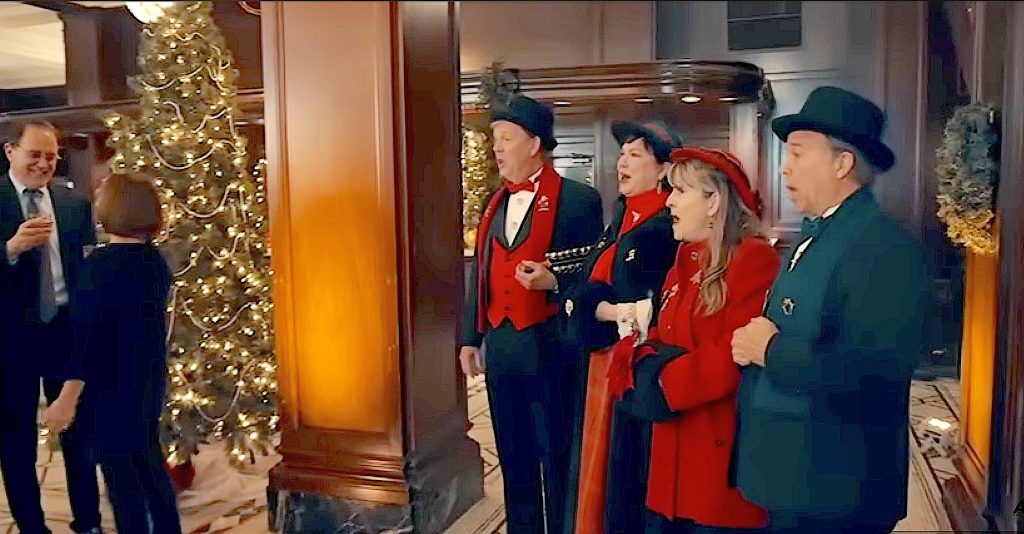
Currently the Dickens Carolers consists of 27 singers who spread through the city in easily interchangeable groups of four using a 55-carol songbook that includes everything from “Silent Night” to “Jingle Bell.” Unlike church choirs, this group defines “carol” as broadly as possible: Their repertoire includes a range of sacred and secular songs. And because singers have to look the part, they draw from a vast wardrobe of Dickensian clothing, both indoor and outdoor garb, that Brad has accumulated over the years.
“I have a whole row of tuxes,” he said. “I have skirts, I have muffs, I have jewelry, fur coats, and caps.” Other groups in town follow this “old English caroler” mold, among them Carolers of Note KC, the American Caroling Company, and the Tinseltown Carolers.
The Dickens Carolers have booked 80 jobs so far as of this writing. As the end of December approaches, any of these quartets might be called upon to sing several jobs in a night. After 42 years, Brad has the planning down to a science. “The assignment for every gig is the same,” he said. “The bass brings the pitch pipe, the tenor brings the jingle bells, and everyone brings their own song book.” The beauty of the holiday season is that clients are not looking for something new. “They want the same standard arrangements of the same familiar tunes, year after year,” Brad said. “We don’t have to update: We just do what we do.”
Of course new holiday songs are being written every year, and over the last century the greatest addition to the “catalogue” has been from the some of the same tunesmiths who brought us the American Songbook: Irving Berlin, Sammy Cahn and Jule Styne, Johnny Marks, and Robert Wells and Mel Tormé.
“It’s exciting that these are now our ‘standards’ and they sing them all over the world and translate them into dozens of languages,” Ben said of this rich repertoire. “How cool it is that as Americans we were able to add to the canon of classic holiday songs.” Sacred or secular, these are songs that “talk about family and faith and community and love,” he added. “That’s why we love them, because they tell our very human stories.”
For tickets and contact information on the choirs mentioned, go to spirechamberensemble.org, festivalsingers.org, kcchorale.org, and te-deum.org. For information on the Dickens Carolers call 713-764-2121 or go to chestnutfinearts.com and click on Dickens Carolers.
—By Paul Horsley
To reach Paul Horsley, performing arts editor, send an email to paul@kcindependent.com or find him on Facebook (paul.horsley.501) or X/Instagram (@phorsleycritic).
