


Community gardens do more than create a sense of affinity and belonging, they also help heal the earth. By cleaning the air, lowering ambient temperatures, and breaking up hard, compacted soil to improve water mitigation in urban settings, these small patches of green are doing big work behind the scenes. Across Kansas City, more than 330 shared plots are transforming neighborhoods one garden bed at a time, and two in particular tell a story worth digging into.
The Giving Grove
One of the founders of The Giving Grove had a knack for growing fruit and suggested urban orchards as a way to give back. The first orchard was planted in 2013 at Hale Cook Elementary School in Waldo. Within a few years, more than 100 orchards had taken root across Our Town, and today there are around 260. “I always say we should be the city of orchards, not the city of fountains,” said Sarah Sikich, director of marketing and communication at The Giving Grove. In fact, no other city in the United States has as many orchards as Kansas City.
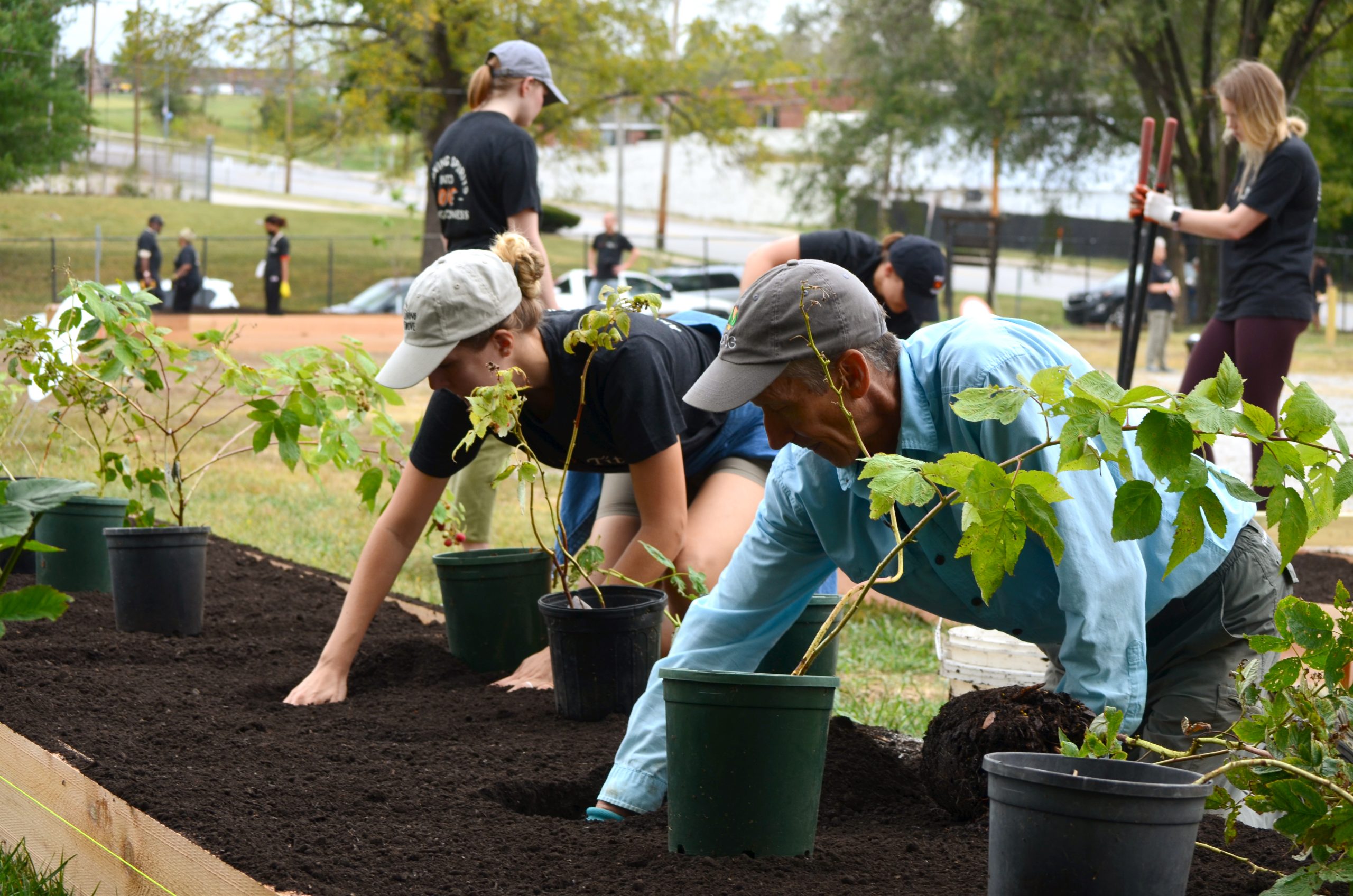
Five years after it started, other cities wanted to know how The Giving Grove had done it. That curiosity kickstarted a national movement, and The Giving Grove’s National Office was born. Today, 17 cities across the country have orchards of their own, each maintained year-round by a steward. The fruit is grown holistically, meaning anyone walking by can pick it and eat it on the spot. Some orchards, at full production, produce thousands of servings of fruit a year. “If you live in Kansas City, you probably have a Giving Grove orchard within a mile of you,” Sarah said.
Harvest season runs from August to October, filled with picking fruit and checking for pests or disease. “Surprisingly, there are more tasks in the winter and spring than in the summer,” Sarah explained. “That’s when we really nurture the trees.” During this dormant season, the staff restores lost nutrients and vitamins to the trees and soil alike, preparing them for the next harvest.
Even outside of the harvest, the orchards serve as gathering spaces for the community. “Once you see people catch the bug for growing fruit, you see them coming back again and again,” Sarah said. None of the program’s volunteers are horticulturists, they are teachers, accountants, and engineers who have picked a new passion. “None of our orchards would exist without these volunteer orchard stewards,” Sarah noted. “They’re the ones who are making the difference, and they’re making each of these spaces unique and incredibly beneficial for their communities.” After 13 years, the biggest challenge is the turnover, and program managers are always looking to train new caretakers.
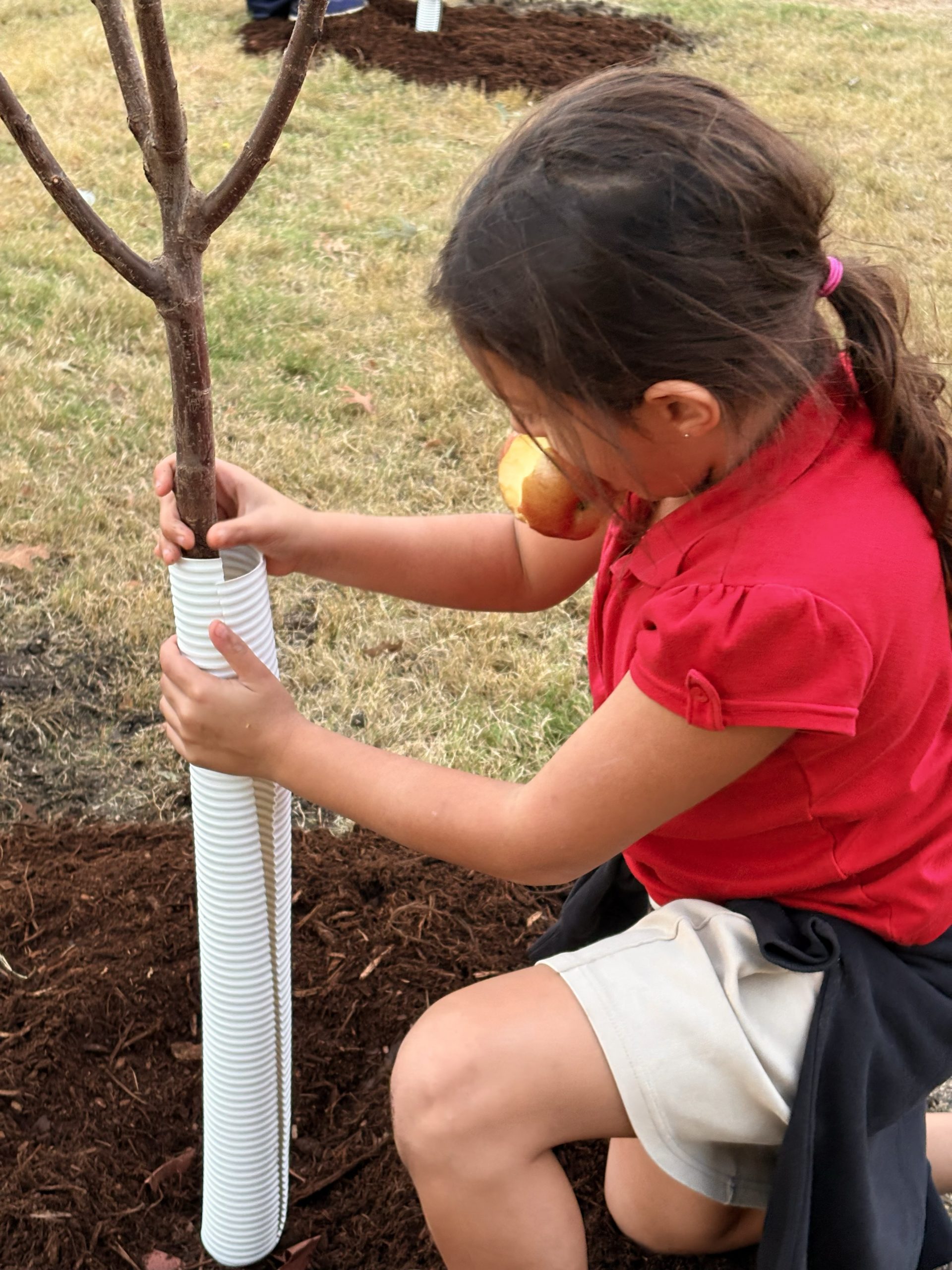
The orchard at Hale Cook Elementary School helped to reopen the school and gave the students a living classroom. One spring, a third grader took it upon himself to thin the fruit from the trees. “I was looking around the orchard, realizing there wasn’t much fruit left to thin,” Sarah recalled. “The after-school coordinators told me he had been going out to the trees every day. He told me, ‘I wanted to make sure we had a good harvest this year.’”
Beanstalk Children’s Garden
Kansas City Community Gardens has been cultivating community for 40 years, and the Beanstalk Children’s Garden has been part of that story for 30 of them. “The Beanstalk is an inspiration garden, functioning as a field trip garden where kids come and learn about where their food comes from,” said Jennifer Meyer, executive director at KCCG. “That was, and continues to be, based on the realization that we’re a couple generations removed from people growing their own food.” Now, the garden is working to welcome more adults.
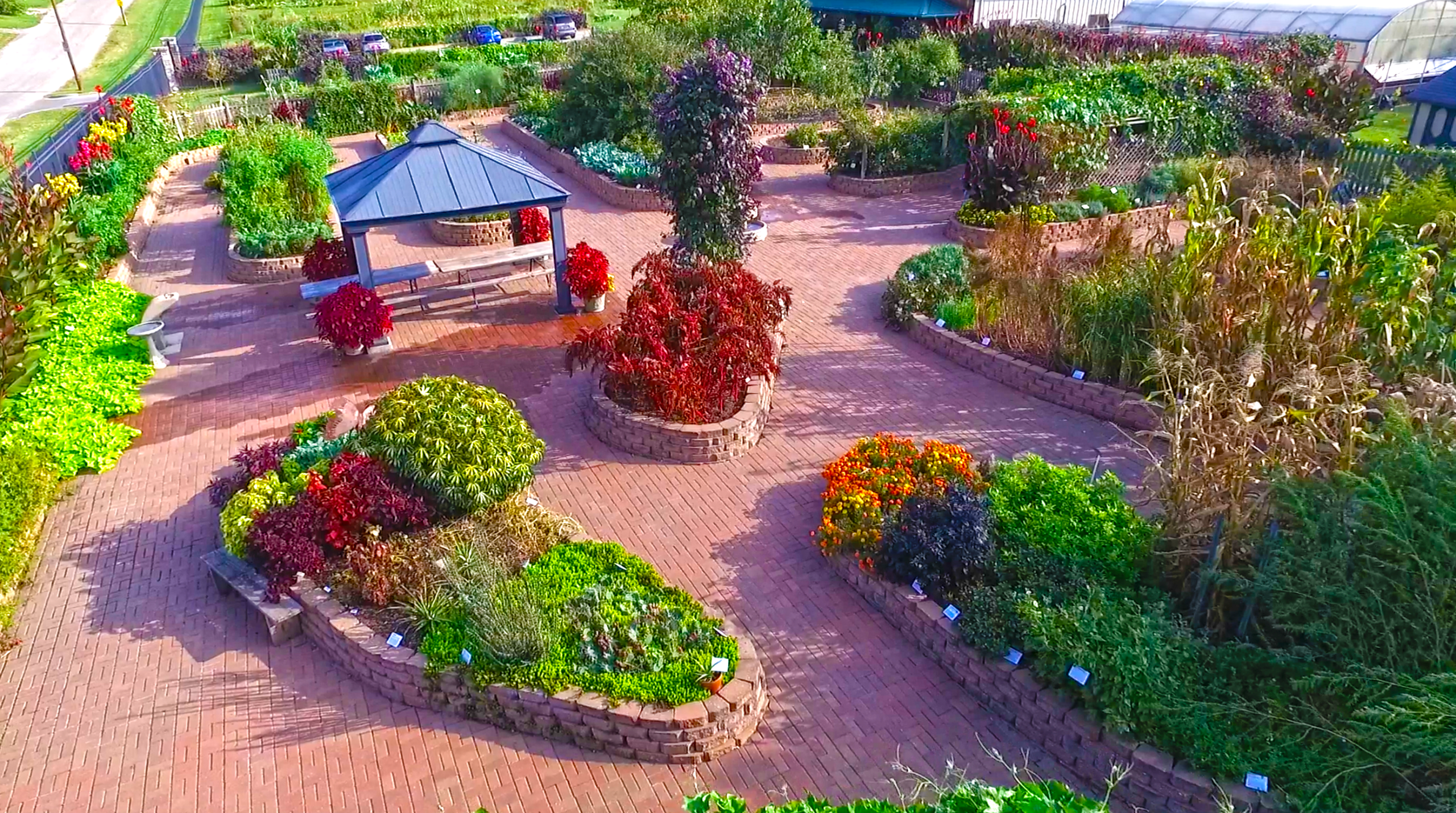
Located in Swope Park, the Beanstalk includes vegetable, small fruit, herb, seed, grain, and water gardens, along with a curiosity space and an orchard. Volunteers, staff, and visitors of all ages come for their shared love of growing things, and for the mental and physical benefits that come with it. “You’ll see people of different generations and backgrounds all talking about their frustrations with squirrels or how much they love tomatoes,” Jennifer said. “Food is such a great unifier.”
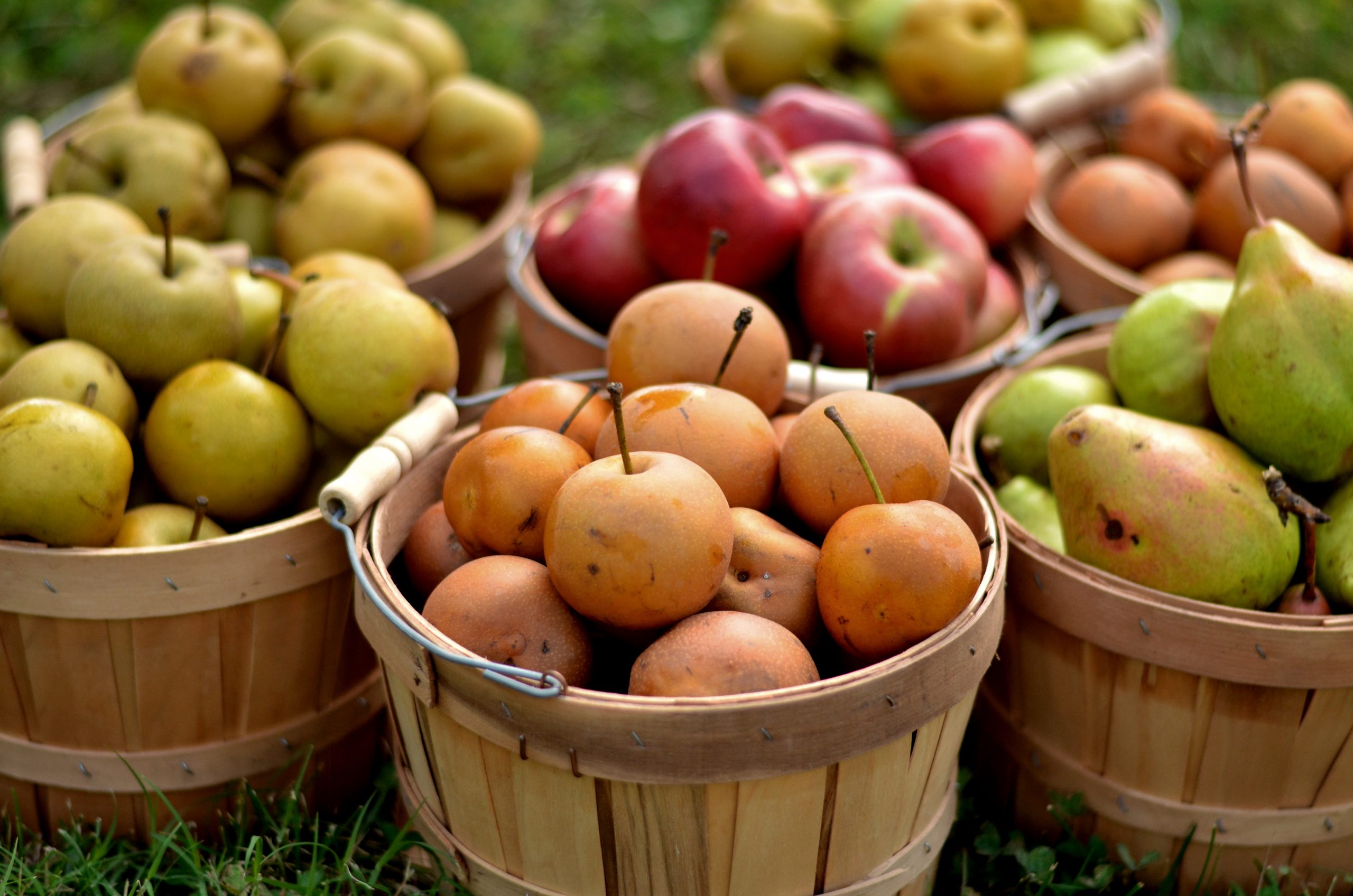
As a teaching garden, the Beanstalk’s daily rhythm is a little different from a typical community garden. In the early hours of the morning, staff arrive to water, prune, and check for ripe fruit and vegetables. During the summer, tour guides cut samples far ahead of visits and set up education stations, and lucky visitors might get fresh juice pressed from the garden’s Asian pears.
Summer camps, homeschool groups, daycares, summer school students, and school-year field trips all make their way through the Beanstalk. “Unlike a botanical garden, where there isn’t touching, here it’s come touch and come smell. Let’s go scout for caterpillars,” Jennifer said. Kids get to taste their way through each zone, learning the difference between fruit and vegetables. Before leaving, each child gets to take a basal cutting from the greenhouse, along with instructions for taking care of it when they get home.
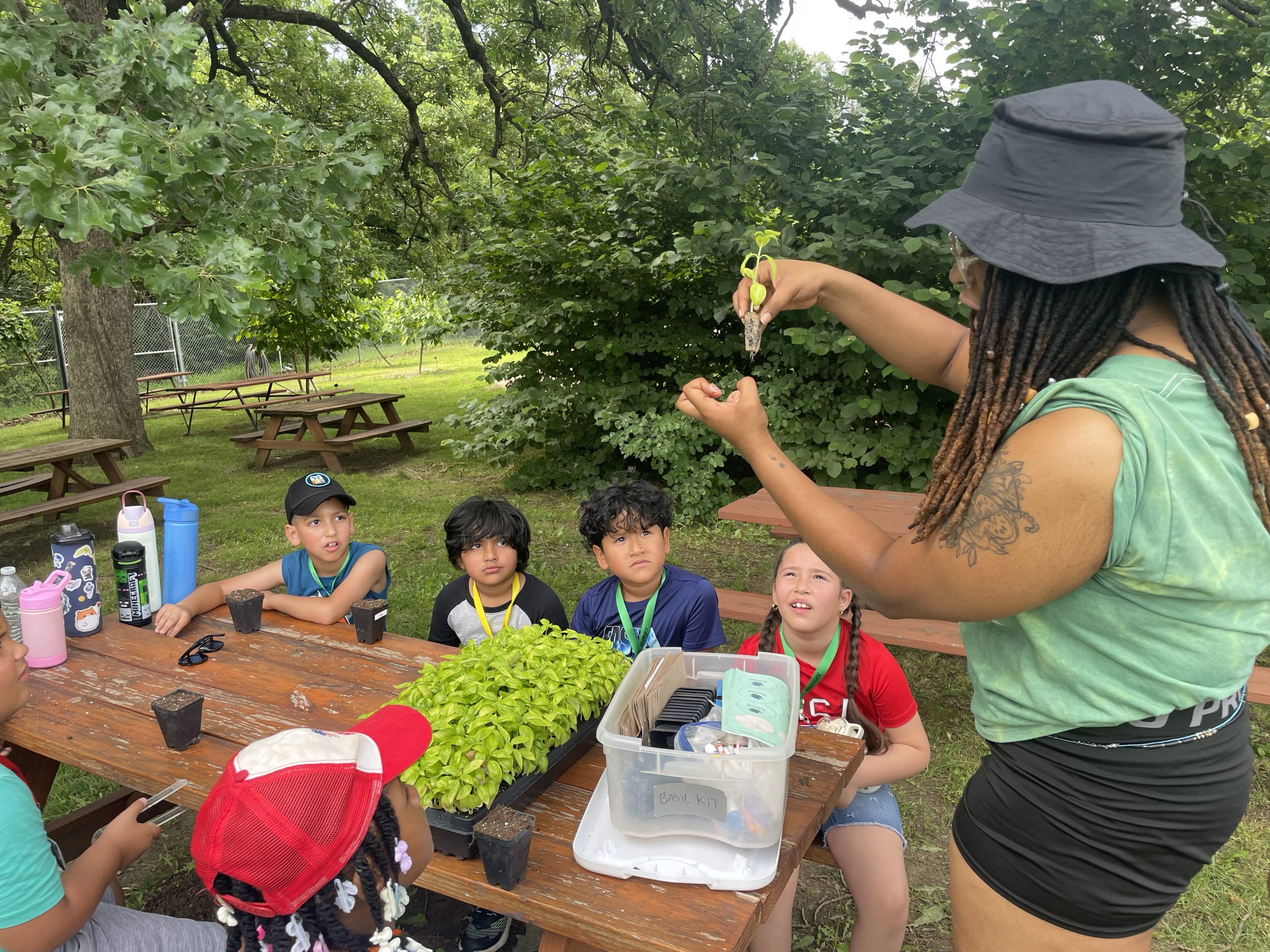
Afternoons are open for walkthroughs, when the garden’s focus often shifts toward adult visitors. Still, plenty of leafy greens go unharvested each season, unlike with the fruit, so the Beanstalk partners with local food pantries to make sure nothing goes to waste.
Every year, the garden hosts two big plant sales for its home gardener members: a spring sale at the end of March, and a Tomato Day Sale at the end of April that draws a line of cars through Swope Park, with visitors waiting for up to three hours before the gates open. Jennifer joked that tomatoes are the ultimate reason people get into gardening.
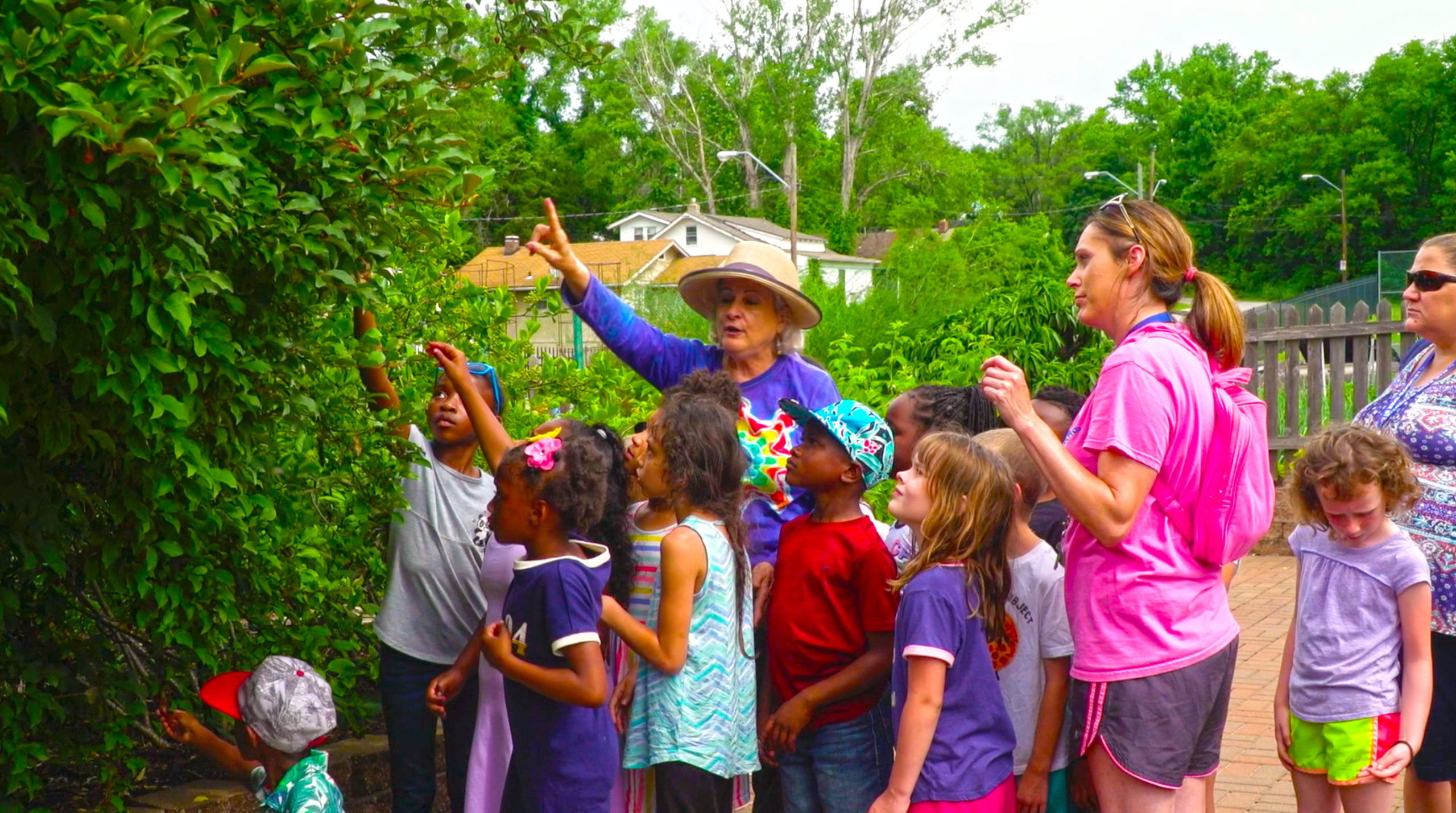
The goal of the Beanstalk is to be the spark and inspiration to make a garden or even start one in a community. “I’ve met so many people over the last few years who are in their 20s who had an earlier Beanstalk experience,” Jennifer said. “Now they’ve got their first house, and one of the first things they do is put in a little garden.”
So, go taste a blackberry or raspberry straight off the plant, there’s nothing quite like that first burst of flavor compared to anything store-bought. “I genuinely think the people who choose to grow food for others are the best people in the world,” Sarah said.
Featured in the September 19, 2026 issue of The Independent.
By Olivia Mahl
