


Puccini’s La Bohème offers different rewards to us at various phases of our lives. Eager young listeners can relate to the idea of falling insanely in love in about 17 minutes, which is what happens to Mimì and Rodolfo in Act I. (Youngsters might even relate to Rodolfo’s mild deception of hiding his new neighbor’s key in order to get closer to her, and even to Mimì’s knowingly going along with it—because she likes him, too.) Those who have lived and loved a bit might relate to Act III’s stark, pragmatic sentiment that it’s best not to break off a relationship in February. “To be alone in winter is a wretched fate,” the lovers sing, as they determine to wait until spring “when the flowers bloom again … and the sun is our companion.”
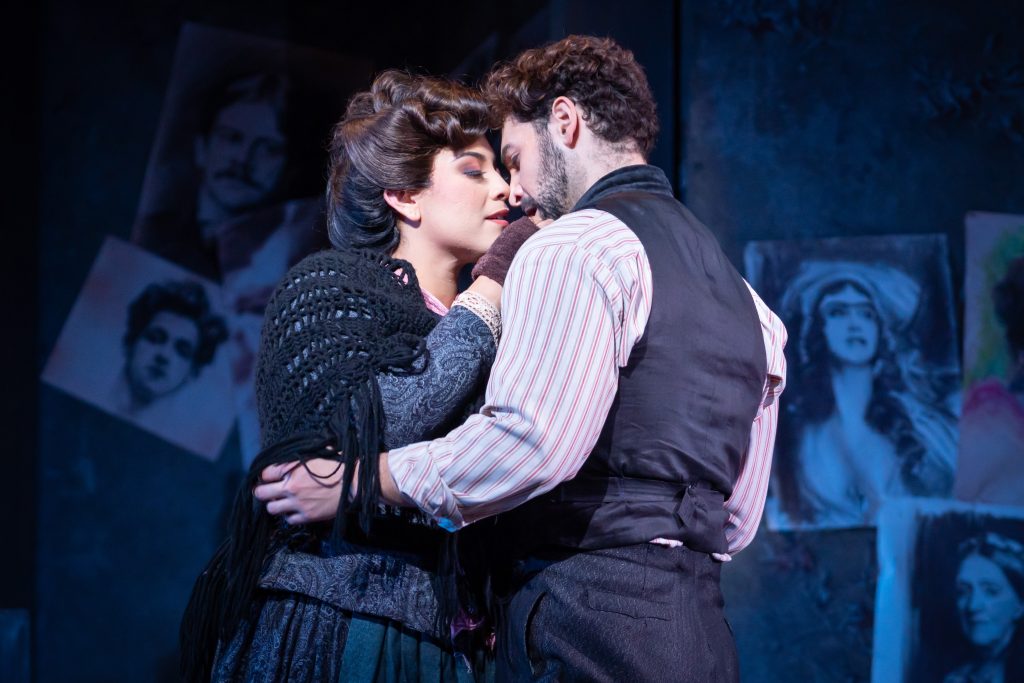
It requires some maturity, perhaps, to grasp Rodolfo’s real reason for wanting to break up with Mimì: His destitute existence prevents him from providing for his consumptive lover, and he’s willing to do anything to remedy this. “Poverty has withered her,” he tells his pal, Marcello, suggesting an alternative that pains him deeply but is perhaps the ultimate expression of love: He wants her happy and healthy at all costs.
But do not be dismayed: Bohème is not all tragedy and life-lessons. There is lightness and fun, even song and dance, to a point where even those who prefer Broadway musicals can find something to love. The Lyric Opera of Kansas City has built a well-grounded, beautifully sung production that was warmly received by a near-capacity Kauffman Center audience on opening night, September 19th. Christopher Allen’s musical direction was so convincing and genuine that not once did we question a tempo or a pause, because we were completely engaged in the drama.
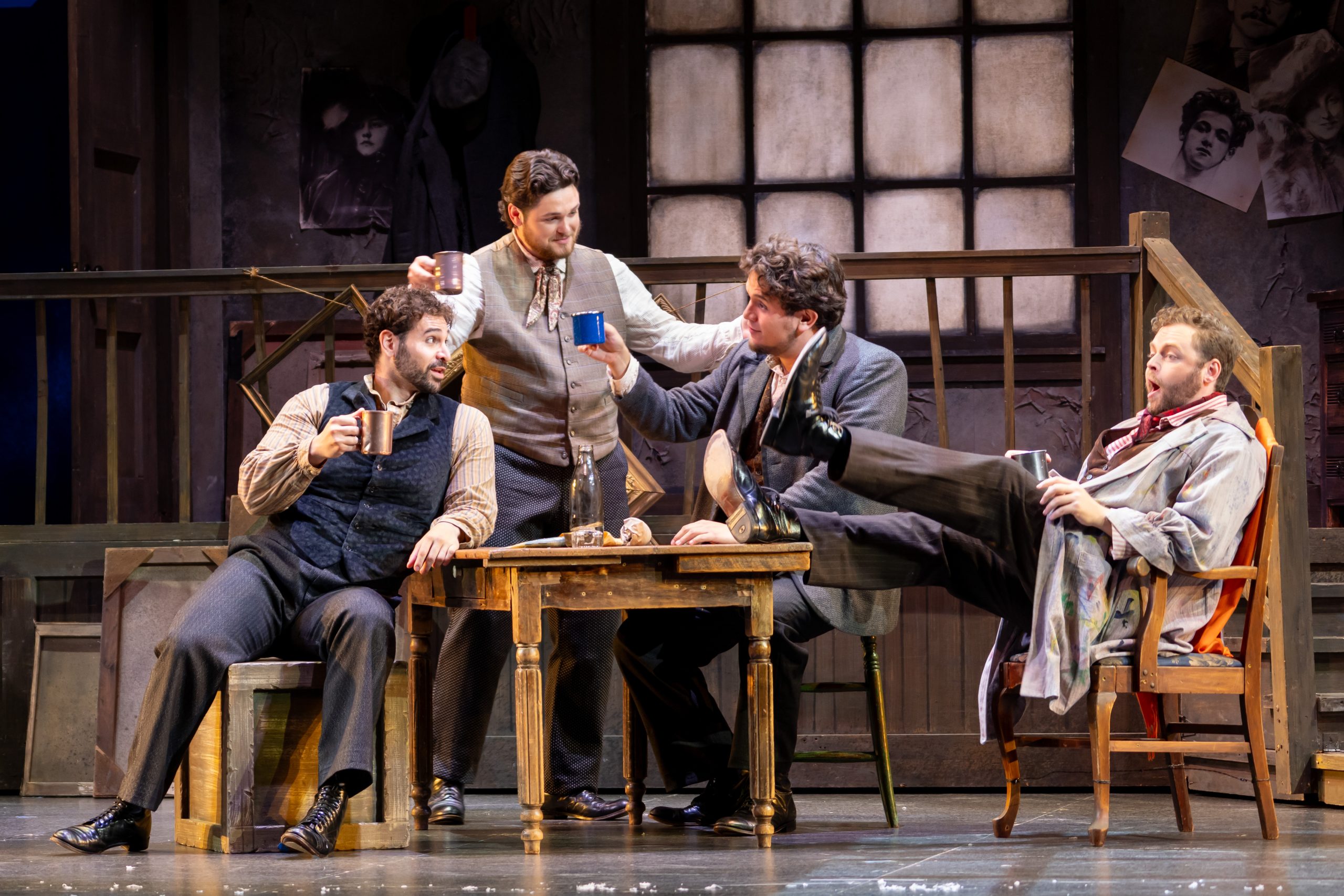
Lyric Opera veterans will recognize the richly detailed set design by former resident designer R. Keith Brumley. It is one of the most durable masterpieces of the nearly 50 sets created by Keith (who was on hand to take a bow at curtain call) during his long career. The Act I garret with its looming windows permits the players to enter and flow with ease, and the Act II Café Momus—with its lavish, lively Parisian street running diagonally—accommodates a large crowd. The somber Act III set helps convey the stabbing, freezing tragedy of this most frazzled of scenes.
Director Garnett Bruce, also a Lyric Opera veteran, along with Assistant Director Joshua Horowitz, created a natural sense of interactions throughout, even in the overcrowded Act II, where the Kauffman stage seemed a tad small, as it often does. The fervid final scene was directed with mastery, as each of the characters back slowly from the figure on the bed as they realize what’s happening—everyone but the distracted Rodolfo. James Sale’s lighting design consistently added to the mood, whether cheery or melancholy, and the wig and makeup designs of David Zimmerman were top-of-the-line. Naturalism reigned.
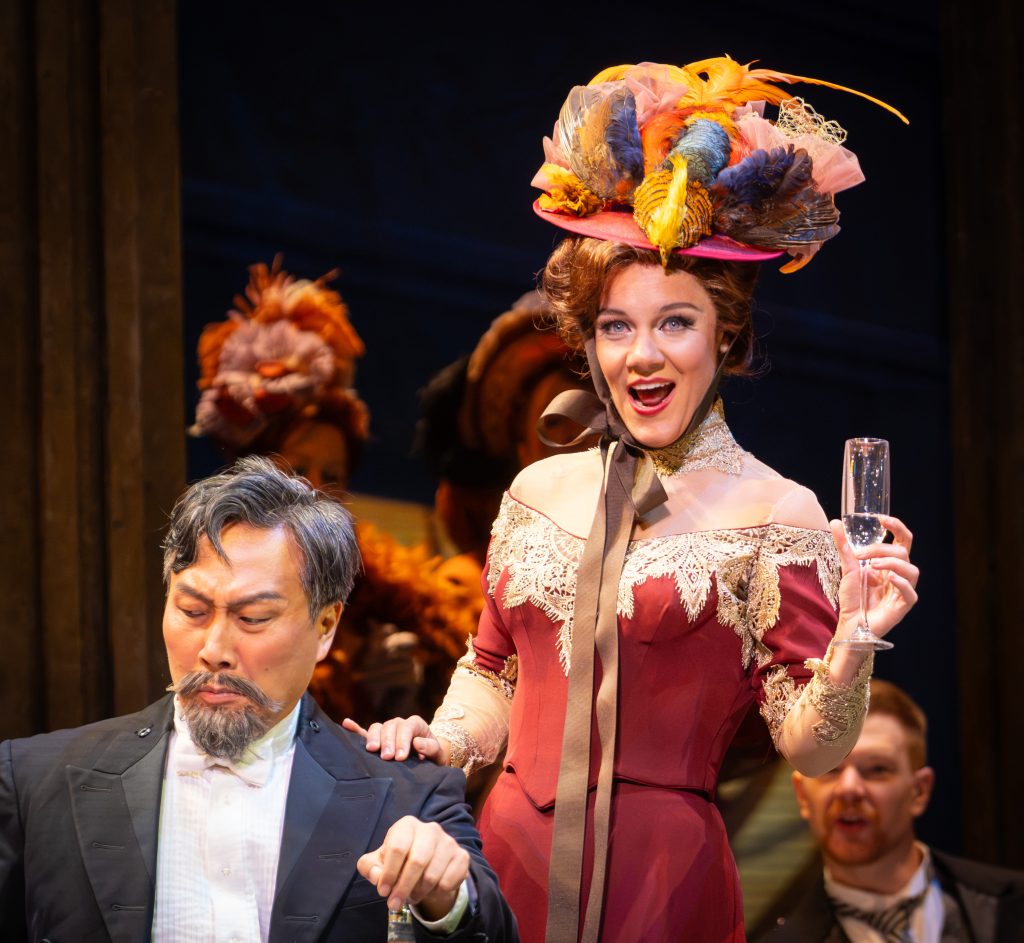
Among the leads, Jose Simerilla Romero was a marvelous Rodolfo, delivering his solos with a clear, open, natural sound that was never strained and always served the text. Gabriella Reyes is a marvelous singing actress, and she successfully portrayed Mimì as a powerful and capable woman, as opposed to the meek and retiring consumptive we sometimes see. Luke Sutliff delivered Marcello with a gorgeous, mellow baritone, and he was a lively, sympathetic presence throughout. Cadie J. Bryan sang Musetta with a rich, diamond-clear soprano and acted the coquette convincingly but without veering into the absurd. Raúl Morales Velazco (Colline), Jon Dirk Ross (Schaunard), and Paul Chwe MinChul An (Benoit/Alcindoro) filled out the strong supporting cast. The chorus (Katherine Kozak, chorus master) sang with sincerity and poise.
—By Paul Horsley
La Bohème runs through September 27th at the Kauffman Center for the Performing Arts. Call 816-471-7344 or go to kcopera.org.
