


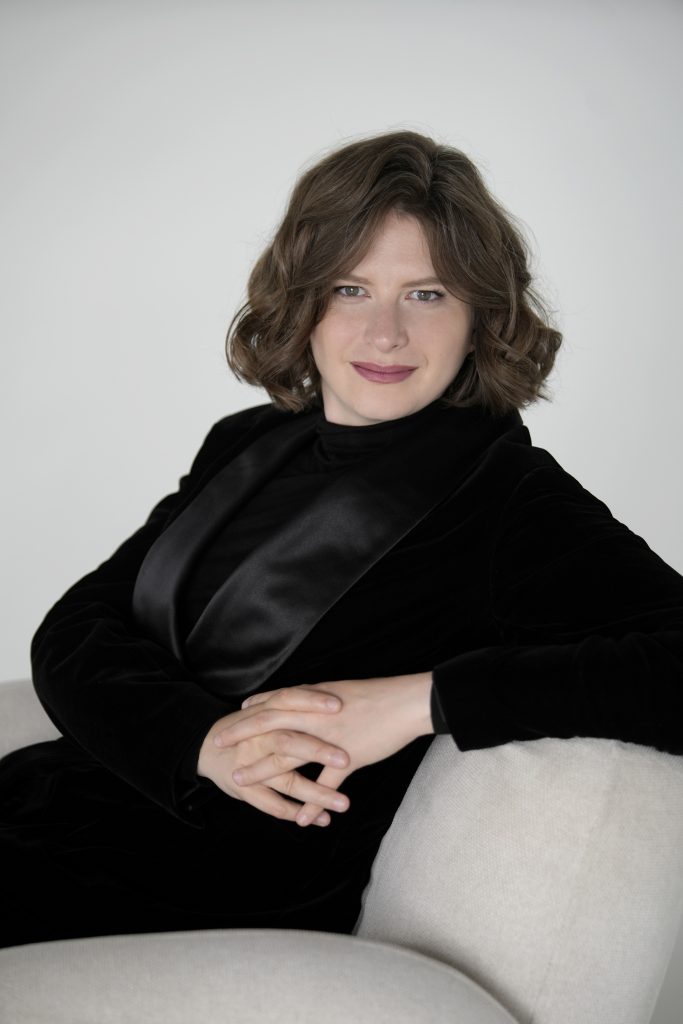
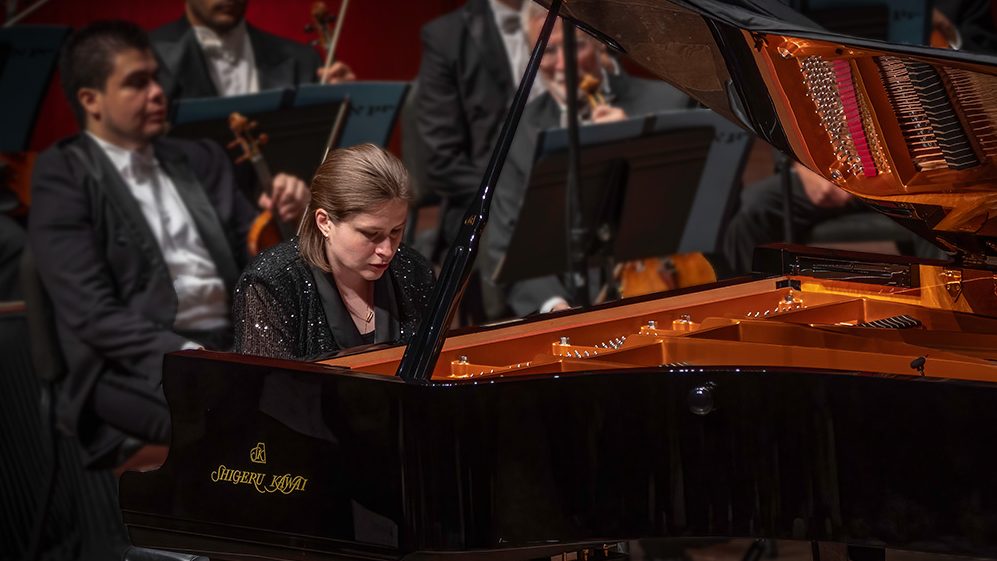
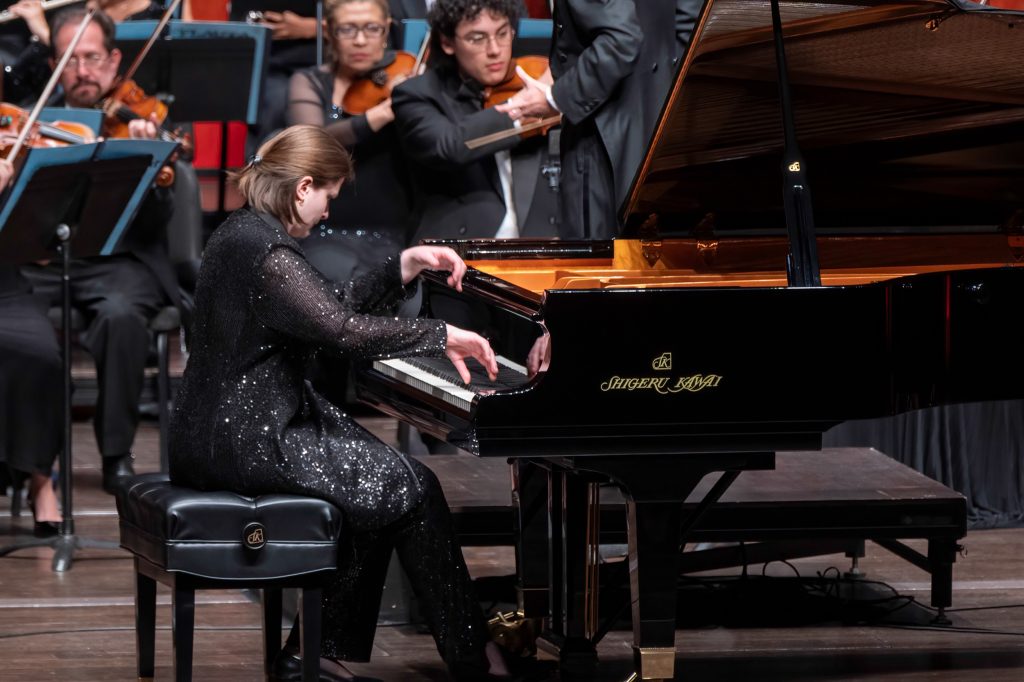
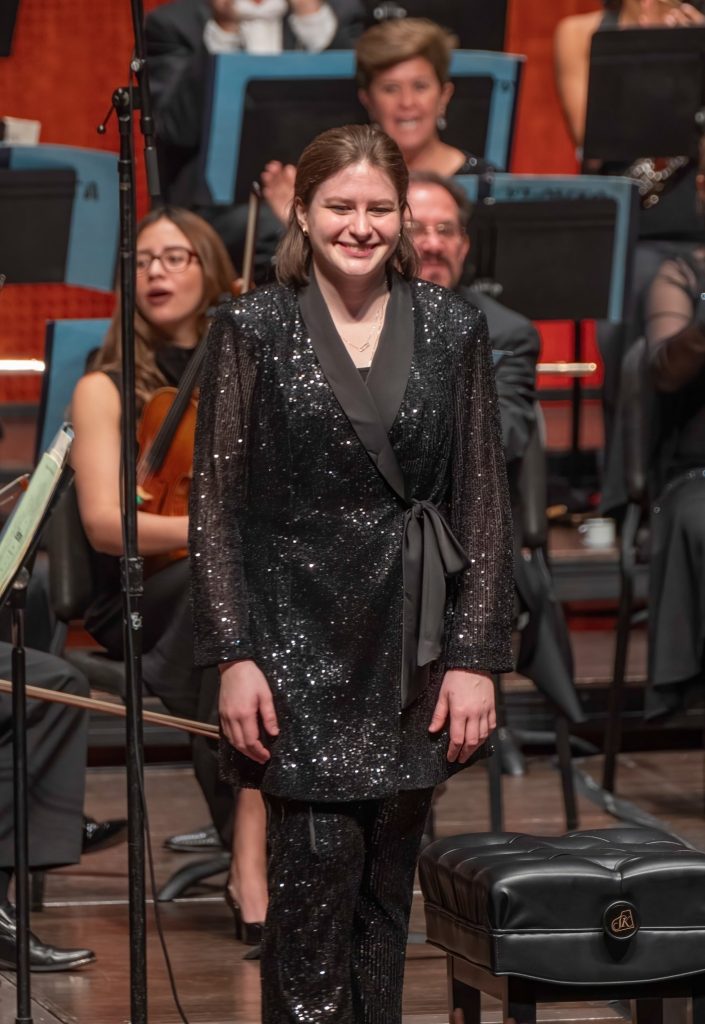
Kansas City has been blessed with an unusual number of extraordinarily gifted young pianists during the last quarter-century, thanks largely to the presence of high-powered programs such as the International Center for Music at Park University. One of the most captivating of these artists is Tatiana Dorokhova, a world-class talent who arrived here in 2023 to study with Van Cliburn Competition Gold Medalist Stanislav Ioudenitch and who has presented some of the most richly rewarding and satisfying performances of music by Haydn, Beethoven, Chopin, Liszt, Brahms, and Debussy in recent memory.
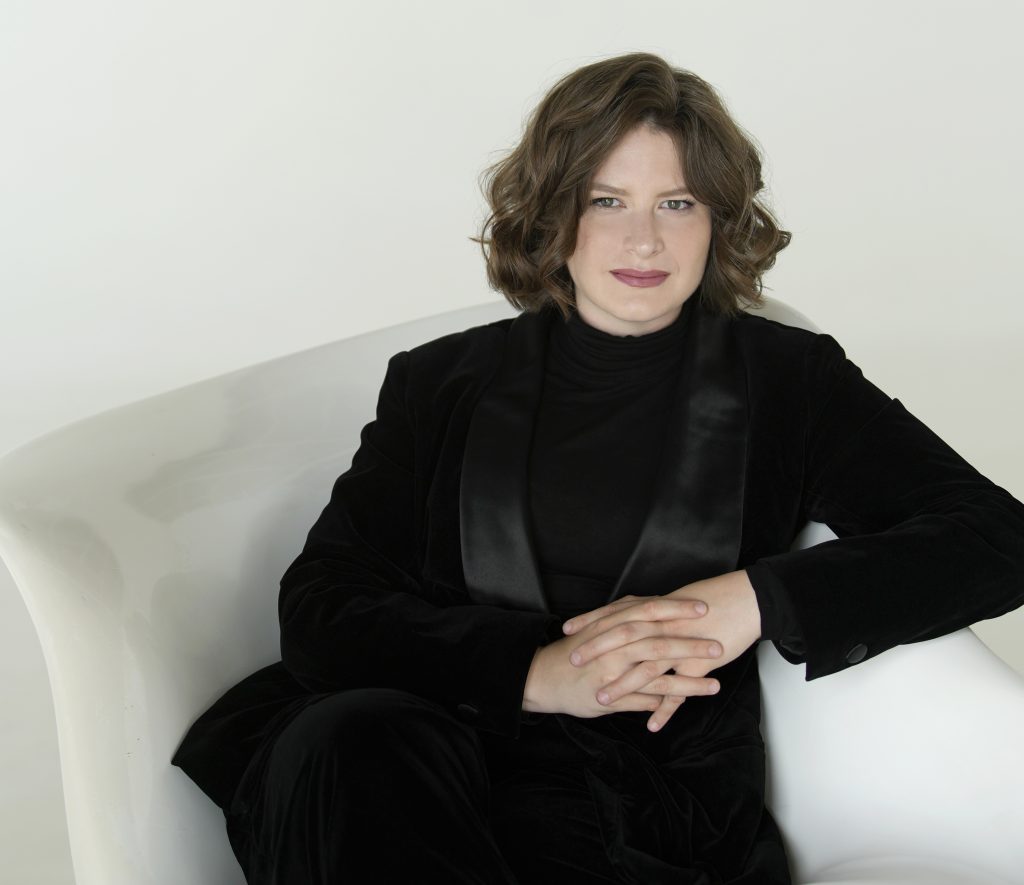
Her deeply probing, technically dazzling interpretations reveal a musical soul that fuses mind with heart, and that possesses a sharp sensitivity to stylistic periods. Her performances of Beethoven have presented a mature, seasoned, even playful understanding of this most challenging music.
Dorokhova was born into a musical family in Volgograd and began her studies at age 6. Her gifts became immediately apparent, and eventually she moved to Moscow for study with Alexander Mndoyants at the Moscow Conservatory; she would later serve as his assistant. She has collaborated with chamber musicians and orchestras worldwide, in some of the most prestigious halls.
She has been a laureate of competitions in Russia, Ukraine, Spain, Italy, and Germany, among others. In 2018 she won the Grand Prix in the Berlin International Music Competition, and in 2022 she was the Silver Medalist at the New Orleans International Competition. Upon arriving in the United States to study with Ioudenitch, she made her presence known: becoming, under his guidance, a laureate of the Gurwitz Competition in San Antonio, the Santa Cecilia Competition in Portugal, and the Enescu Competition in Romania.
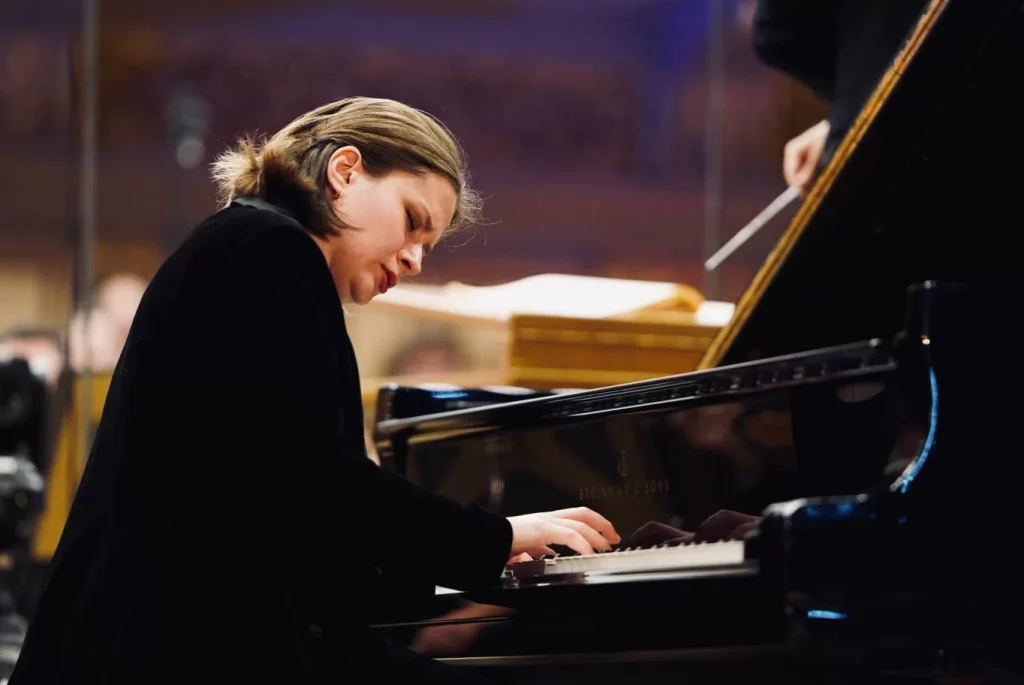
The year 2027 marks the 200th anniversary of the death of Ludwig van Beethoven. Why focus on a death-anniversary? Because quite often a full assessment of an artist’s contribution does not begin until after his or her death. For her part, Dorokhova determined to achieve what few pianists have mustered—to play all 32 of Beethoven’s piano sonatas in a single season.
This project, eight concerts running from October through May at The 1900 Building, also marks Kansas City’s first Beethoven piano cycle since the 1987-1988 season—when Richard Goode presented all 32 with the Friends of Chamber Music. Recently Dorokhova was kind enough to answer some questions about Beethoven’s life and legacy. We transmit her comments in their entirety. For more about the artist, go to tatianadorokhova.com. For more about the concerts (dates, tickets, and information), see 1900bldg.com.
The Independent: What insights can an audience gain from hearing all the sonatas in one stretch, and all by the same pianist?
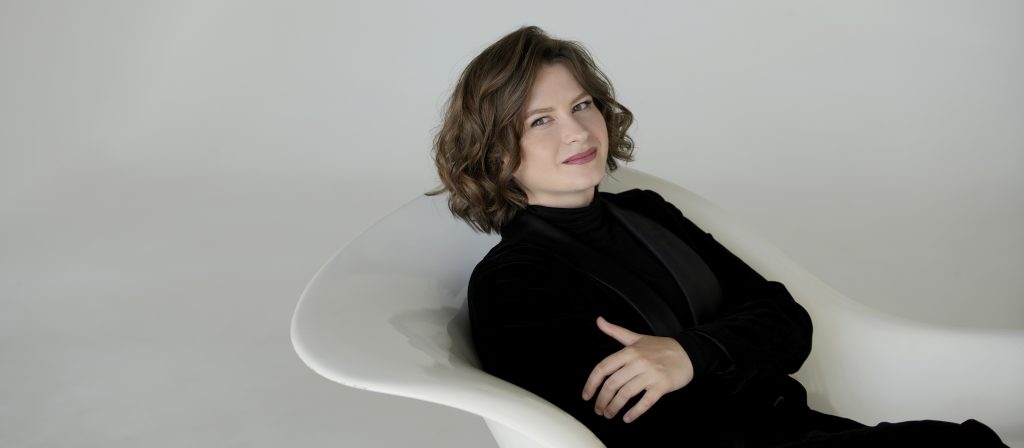
Tatiana: I see the 32 sonatas as one vast, unified space. For me, it is important to perform and to hear all of them, because if you take even one sonata away, the picture somehow feels incomplete. As a performer, I want to guide the audience through this space and let them see every corner of it through my eyes.
It is a real journey—approximately nine hours of music. But I believe that after going through the entire cycle, you cannot remain quite the same person. Of course, everyone will come away with a different experience.
I have always been concerned that Beethoven’s music is sometimes treated as something extremely serious, even intimidating or boring. In fact, his music is the opposite. There is so much humor, wit, playfulness and joy in it, even when it becomes deeply tragic. We don’t need to be afraid of Beethoven. To me, his music is life in a concentrated form. And somehow, it lifts us above ourselves.
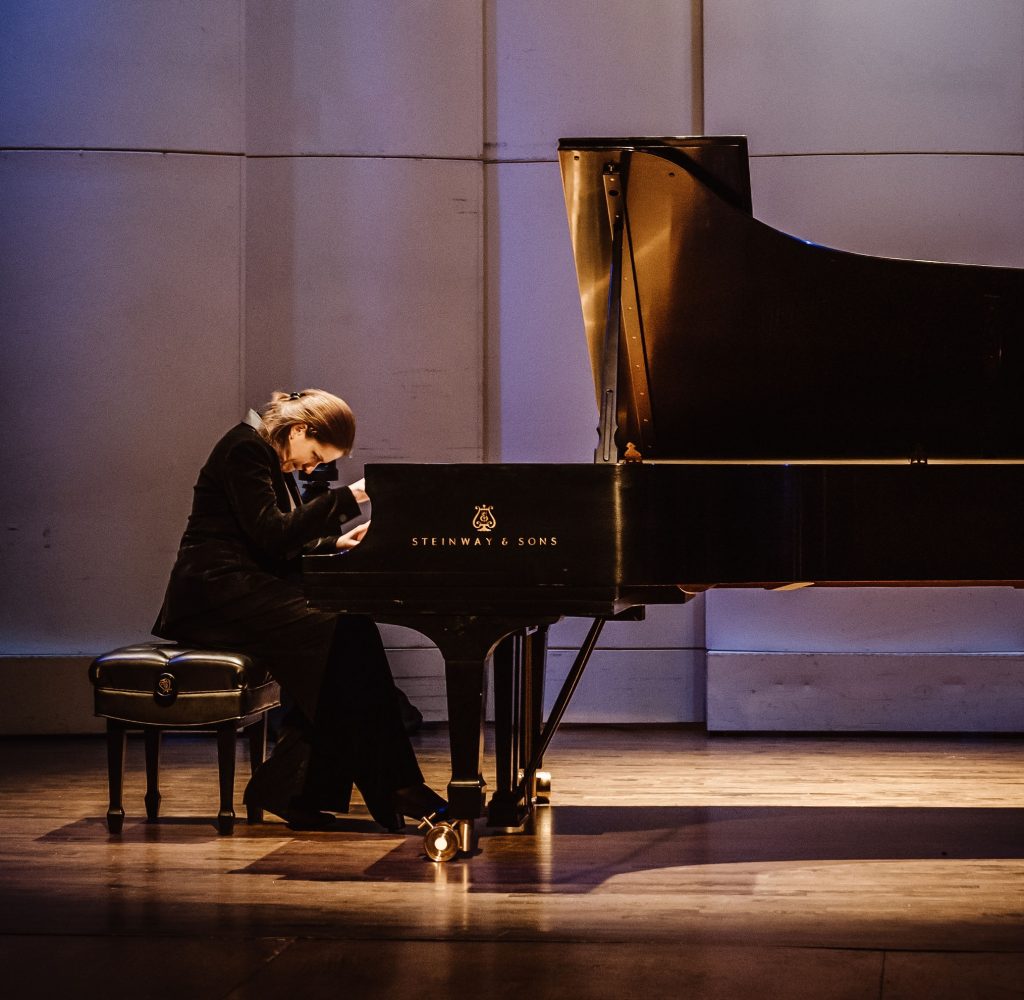
I also want to remind audiences that Beethoven wrote many extraordinary sonatas beyond the few famous ones—the Appassionata, the Moonlight, the Pathétique. There are so many masterpieces in this cycle that deserve to be known and loved just as much.
What were the principles behind the structuring of each recital, as opposed to playing the sonatas chronologically?
I felt that playing the sonatas strictly chronologically would not necessarily create the strongest concert experience. There is so much musical material in the first four sonatas that each could form an entire symphony. I wanted to place sonatas from different periods of Beethoven’s life next to one another. This gives each program more contrast and allows us to see different sides of Beethoven within a single evening.
At the same time, the entire cycle gradually leads toward the Hammerklavier Sonata in the final concert. For me, it is a kind of Everest of the piano repertoire. It lasts almost fifty minutes and contains an extraordinarily profound slow movement followed by one of the most demanding fugues ever written for the piano. But its difficulty is not only technical. The emotional, spiritual and intellectual demands it makes on both performer and listener go far beyond virtuosity.
What were your earliest memories of Beethoven? As a listener, and as a performer? How has your relationship with his music changed?
I don’t remember having any particular fascination with Beethoven as a child. His music was simply always there. My teachers often gave me his works to study, and the first piano concerto I ever learned was Beethoven’s Second.
My more conscious relationship with his music began when I moved to Moscow as a teenager. I started playing his chamber music—the Third Violin Sonata and the Third Cello Sonata—and four-hand arrangements of his symphonies and quartets with friends. I also listened to Maria Grinberg’s complete recording of the piano sonatas and the Alban Berg Quartet’s Beethoven cycle.
One of my strongest memories is of somehow managing to get into a sold-out Berlin Philharmonic concert at the Moscow Conservatory. Sir Simon Rattle was conducting Beethoven’s Seventh Symphony. I remember being overwhelmed by the power of the music—its energy, joy, wit and extraordinary elevation of spirit—and, of course, by the level of the orchestra and conductor.
Since then, my relationship with Beethoven has never stopped developing. I keep discovering new things in his music, and I don’t think that process will ever end. Its depth seems inexhaustible.
Why do you think Beethoven has meant so much to so many people, in so many different cultures, for more than two centuries?
I can only really speak for myself. Beethoven’s music helps me believe in the best of what human beings are capable of. It reminds me of what is most precious in us: our capacity to love, to think, to struggle, to hope, and to rise above ourselves.
For me, Beethoven is ultimately a source of hope. Perhaps that is one reason his music continues to speak to people so directly, regardless of where or when they live.
What are some things you have learned about Beethoven through this project that have surprised you?
One of the most important discoveries for me has been that Beethoven did not suddenly become a profound composer in his late works. The person we encounter in the late sonatas was already there at the beginning.
Even in the earliest sonatas, I find the same enormous heart, depth, wit, imagination and nobility that we associate with his mature music. What changes is his language.
And I am no longer sure that his language simply becomes more complex. In many ways, it becomes more precise, more concentrated and even clearer. The complexity of the late works can be deceptive. We should not be afraid of it. Once you enter that world, what initially seems difficult begins to reveal an extraordinary richness.
What do you think Beethoven was like as a person? What can we know about his inner life from what we read, and from the music itself?
Beethoven was certainly an extraordinary and complicated person. We hear many stories about his explosive temperament and eccentric habits—his conflicts with servants, pouring cold water over his head, counting the beans for his coffee. But many of these stories also became part of the mythology that grew around him, especially in the Romantic era, when people wanted a great artist to be extraordinary in every aspect of life.
We also tend to imagine Beethoven as completely isolated in his later years. Yet his conversation books show that he had friends around him—people who helped him and with whom he discussed everything from everyday matters to ethical and philosophical questions.
But ultimately, these details are not what matter most to me. We know that his deafness was an enormous tragedy. We also know that his personal life brought him a great deal of disappointment.
What moves me most is what he did with all of this. Despite suffering and disappointment, his music did not become bitter. Somehow, he found the strength to keep developing and to express an extraordinary love of and gratitude for life.
How is Beethoven’s music unique? What distinguishes it from the music of other composers you perform?
For me, it is the combination of power, purity and an extraordinary elevation of the human spirit.
What is astonishing is how little Beethoven sometimes needs to achieve this. The textures can be simple, the harmonies fundamentally classical, the rhythms elemental, and the melodies not necessarily beautiful in a conventional sense. Yet from these very basic materials, he creates something immense.
—Paul Horsley
Tatiana Dorokhova performs the Beethoven Sonatas in eight programs, all at the 1900 Building. For tickets see 1900bldg.com.
October 15: Sonatas Nos. 1, 8, 6, 13 & 26
November 11: Sonatas Nos. 19, 4, 27 & 32
December 3: Sonatas Nos. 24, 20, 10, 22 & 11
January 22, 2027: Sonatas Nos. 2, 28, 14 & 30
February 18: Sonatas Nos. 3, 7, 12 & 21
March 25: Sonatas Nos. 15, 18 & 31
April 23: Sonatas Nos. 25, 17, 9 & 23
May 20: Sonatas Nos. 5, 16 & 29
